Last‑Mile Costs Are Quietly Killing Margin in NZ – And Packaging Might Be Your Best Lever to Fix It
The NZ last‑mile squeeze
If you sell online in New Zealand, chances are your biggest logistics problem is not your warehouse – it is the last few kilometres to your customer’s door.
Recent NZ (and NZ‑relevant) data suggests last‑mile can account for around half of total logistics costs, with average delivery costs estimated at about $9 per parcel.
Domestic freight rates have climbed again, with courier and express services rising 4–7% from mid‑2025, on top of fuel, labour and zone changes.
For many Kiwi brands, that means every “free shipping” or “replacement for a breakage” quietly erodes already‑thin margins.
At the same time, online volumes are not slowing: NZ Post data shows billions in annual online spend and strong year‑on‑year growth in transactions, which only magnifies last‑mile pressure.
What Kiwi customers now expect
The equation is getting tougher because customer expectations have shifted just as fast as costs.
Research cited by NZ Couriers and others shows around three‑quarters of consumers want sustainable packaging, yet only a minority are willing to pay more for it.
NZ packaging surveys show over 60% of Kiwis say it’s important packaging can be recycled locally, and nearly half care that packs are made from recycled materials.
Globally and in NZ, shoppers now treat fast, low‑cost (or “free”) delivery and hassle‑free returns as baseline, not a premium extra.
So brands are stuck in a bind: absorb rising shipping and damage costs, or increase prices and risk conversion – all while being asked to use less, better packaging.

Where packaging hits last‑mile cost
From Woodhill Distribution’s perspective, packaging is no longer just a sustainability or brand question – it is a last‑mile cost strategy.
Last‑mile costs compound when:
Parcels are oversized for what they carry, pushing you into higher cubic or zonal pricing brackets.
Damage rates are high, leading to replacements, reships and refunds – each one triggering another last‑mile cycle.
You carry too many packaging SKUs, slowing pack time and adding handling and storage cost.
Right‑sizing, reducing damage and simplifying the pack bench are three of the most direct ways to reduce the cost‑to‑serve for every order you ship.
How Flexi‑Hex helps – beyond “nice sustainable packaging”
Flexi‑Hex is often seen first as “beautiful sustainable packaging”, but its real impact for last‑mile economics is more fundamental.
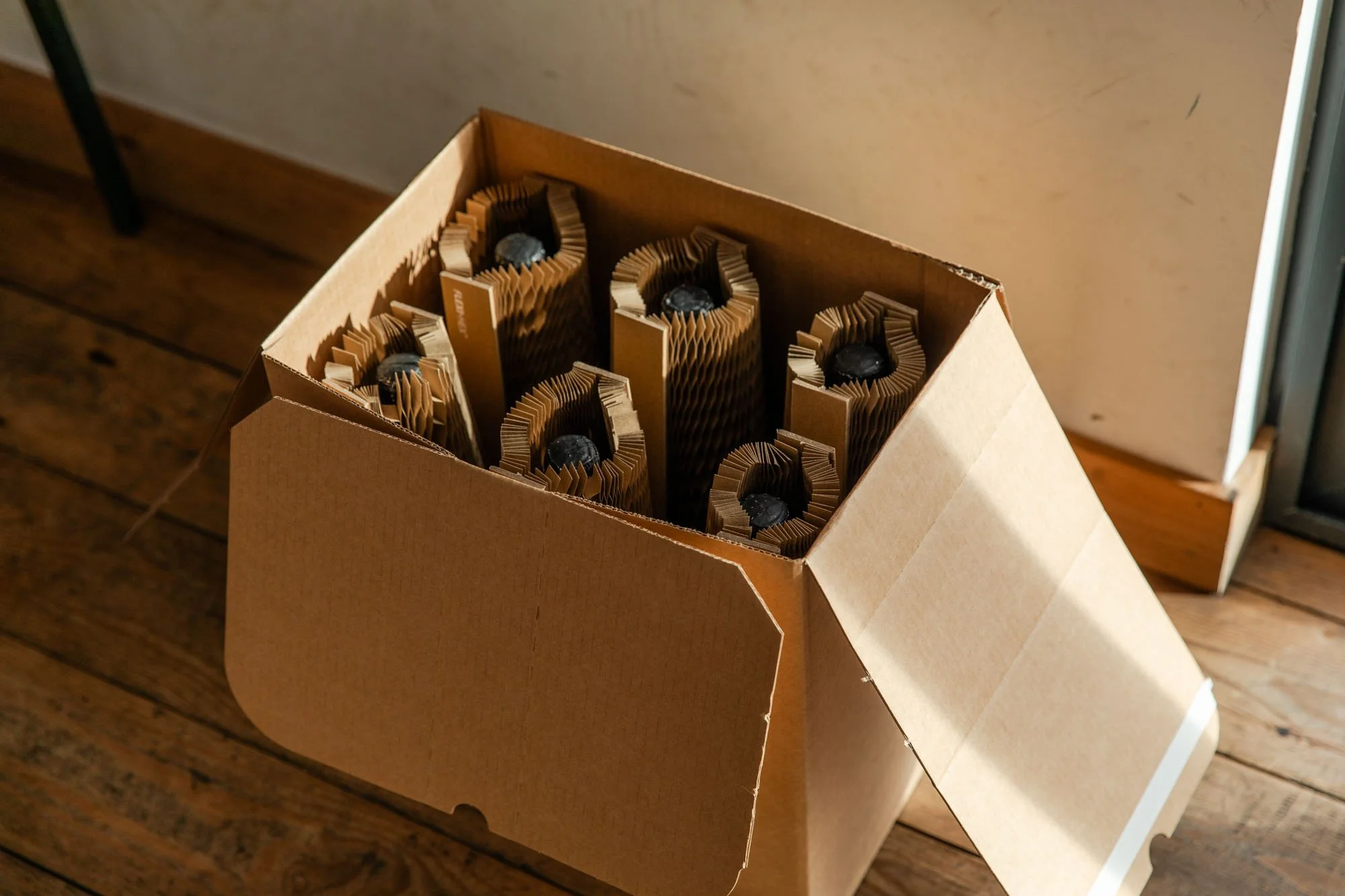
Damage reduction: The honeycomb paper structure delivers high protection for bottles and fragile items, reducing breakages and the need for costly resends.
Compact and right‑sized: Flexi‑Hex sleeves compress and adapt to the product, so you can ship in tighter, more efficient cartons – often “ship in own container” – reducing volumetric charges and void fill.
SKU and process simplification: One flexible protective format can cover a wide range of products (wine, spirits, olive oil, cosmetics, homewares), lowering SKU complexity and speeding fulfilment.
Sustainability credentials: Made from 100% recycled paper, curb-side recyclable, reusable and home‑compostable, Flexi‑Hex aligns with Kiwi expectations for low‑impact, easily recyclable packaging.
In other words, better packaging design can simultaneously lower damage and freight costs while improving sustainability and unboxing – the exact trade‑off brands are wrestling with.
What Woodhill Distribution is seeing in NZ
Working with wineries, craft spirits producers, specialty food brands and e‑commerce retailers around Aotearoa, we see the same pattern again and again: last‑mile is where margins go to die, and packaging is often under‑leveraged as a solution.
The most effective conversations are no longer just, “Do you want more sustainable packaging?” but:
What is your average cost‑to‑serve per order, including replacements for damages?
Where are you paying for air in your cartons through cubic weight or zone bands?
How many packaging SKUs are you managing, and how does that affect pack speed and labour at peak?
Flexi‑Hex gives Woodhill Distribution a practical way to help brands answer these questions with tangible changes on the packing line and in their freight invoice – not just in their sustainability report.
A call to NZ brand owners
If you are a New Zealand wine, spirits, specialty food or D2C brand, now is the time to treat last‑mile cost as a design problem, not just a freight‑rate problem.
Audit your last‑mile costs and damage rates.
Map your packaging range to your freight charges and see where you are paying for air.
Explore whether a protective, right‑sized solution like Flexi‑Hex can cut both your carbon and your cost‑to‑serve per order.
The businesses that win the next phase of NZ e‑commerce will be the ones that can offer fast, low‑friction delivery and genuinely sustainable packaging – while still making money on every parcel they send.