
Packaging is one of the simplest levers olive oil producers can pull post‑harvest to protect margins, sharpen customer experience, and back up their sustainability story — without overhauling the whole operation.

Post-harvest pressure, thin margins
Once the oil is filtered, bottled, and labelled, every damaged bottle, leaky carton, or ruined gift pack shows up directly in your margins, freight bill, and customer feedback. In that context, secondary and tertiary packaging shouldn’t sit in the “nice-to-have” bucket; they’re a practical tool for protecting revenue and reputation in a tight post‑harvest window.
Hidden cost of breakages
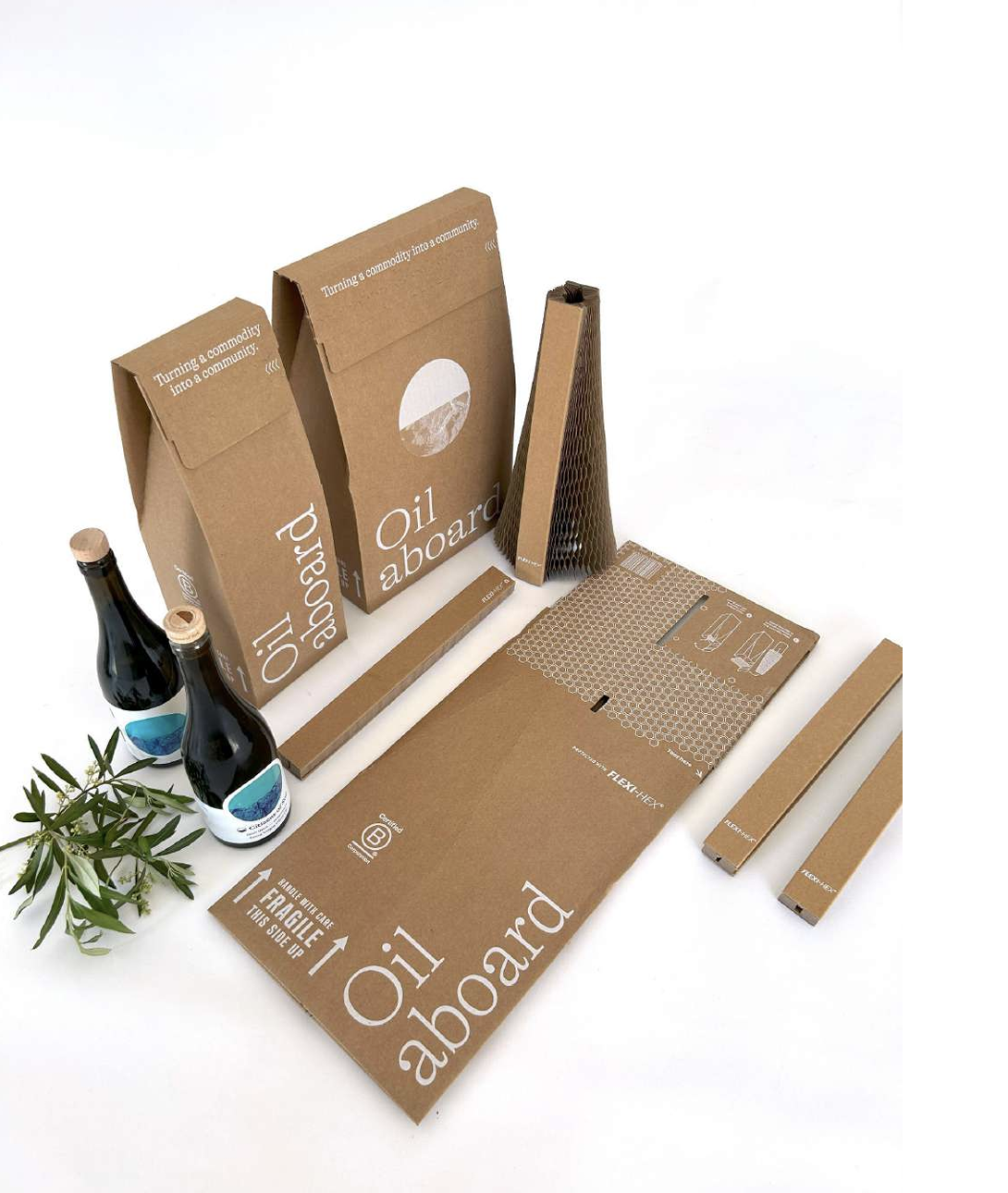
Even a single broken bottle can turn a whole carton into waste once you factor in contamination, return freight, replacement stock, and the admin that comes with it. Moving from “shelf-only” cartons to bottle‑level protection — for example, honeycomb paper sleeves around each bottle — adds shock absorption without relying on plastic bubble wrap or messy loose fill.
Freight efficiency and right-sized cartons
Because many producers ship a mix of 250 ml, 500 ml, and 750 ml bottles, a jumble of “almost-right” cartons often leads to oversized boxes, higher volumetric charges, and bottles that move and collide in transit. Cartons sized around a protective sleeve system can stabilise product, reduce cubic volume, and make the packing bench faster because staff aren’t improvising with tape and void fill for every order.
Unboxing as part of the brand
Your brand story meets the customer when they crack open a trade carton or home delivery, and oil‑stained boxes, plastic void fill, or rattling bottles undercut a premium positioning. A clean, paper‑based unboxing experience — where bottles are held firmly in a sturdy carton — reinforces that you take care of the details and makes it more likely they’ll share, re‑order, or recommend.
Sustainability customers can see
Over 60% of Kiwis say it matters that packaging can be recycled locally, so how you pack is becoming part of the sales conversation as much as the product itself. Shifting to paper‑based, kerbside‑recyclable protection and outers removes plastic from many last‑mile shipments and gives you a visible proof point when retailers or customers ask about your sustainability credentials.
Simplifying operations at the bench
Post‑harvest, complex packaging setups with multiple SKUs and ad‑hoc inserts slow the packing bench and increase inconsistencies that lead to damage. Standardising around a small set of sleeves and right‑sized cartons can streamline training, improve protection, and reduce cost‑to‑serve without needing a full packaging redesign.
Where Woodhill and Flexi-Hex fit
Woodhill Distribution brings the Flexi‑Hex honeycomb paper system into Aotearoa with local stock and an understanding of NZ freight and recycling realities. We can map your bottle formats and order profiles, then recommend a simple mix of sleeves and cartons you can test at small scale and roll out if it proves its worth for your brand.
