
A handmade mug isn’t just another item on the shelf. Neither is a carefully finished vase or a piece you’ve spent months developing.
When something breaks in transit, replacing it involves more than finding another one. There’s the customer conversation, the photos, the claim, another packing job and another delivery. For a one-off piece, a like-for-like replacement may not exist.
That’s why packaging deserves the same consideration as the product inside it.
For ceramics and fragile homewares, start by checking the individual piece, its vulnerable features, the protective material and the outer shipping box together. Flexi-Hex paper sleeves are an option worth trialling for suitable products — not a one-size-fits-all promise.

Start with the piece, not just its dimensions
Height and width help narrow down your packaging options. They don’t tell the whole story.
A handle, narrow neck, lid or decorative detail can change how a product needs to be packed. Handmade pieces may also vary slightly from one batch to the next.
Before choosing packaging, note:
The product’s dimensions and weight
Handles, spouts, rims or other exposed details
Separate parts, such as lids
Surfaces or finishes that need particular care
Whether it ships alone or with other items
Any variation between individual pieces
Use a representative finished product for your trial. If your range includes several shapes, check them separately rather than assuming one successful fit covers everything.
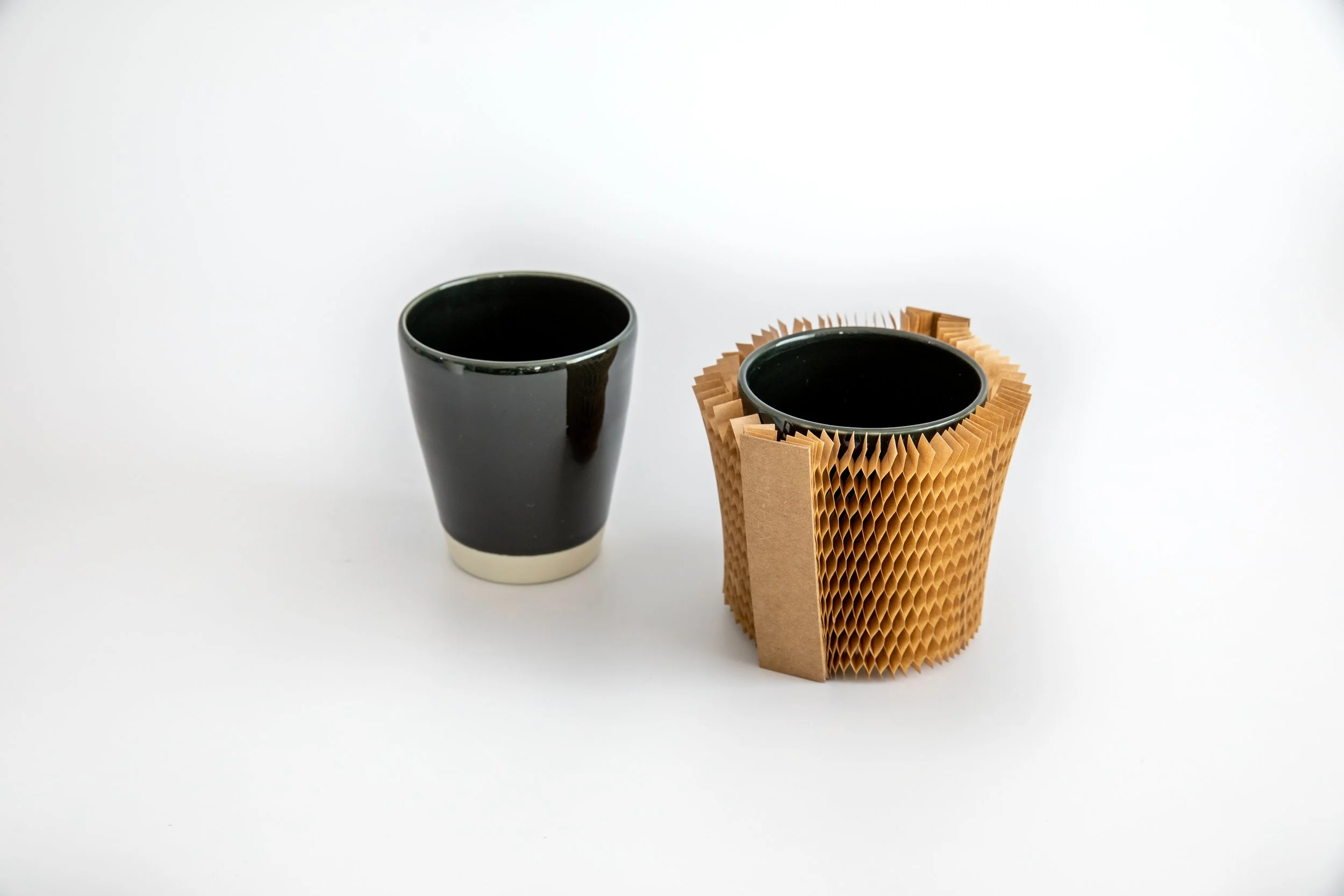
Where Flexi-Hex fits
Flexi-Hex sleeves use an expandable honeycomb paper structure that opens around the product.
Flexi-Hex Air is designed for smaller, delicate products, including ceramics and glassware. Woodhill stocks Air sleeves in four lengths, from 10 cm to 35 cm. Its heavier Mini sleeve is another option for certain homeware items, including cups and vases. The appropriate choice depends on the piece and the complete packing arrangement.
For a ceramics studio or homeware brand, that makes a sample trial a useful starting point. You can assess:
How the sleeve fits your actual product
Whether vulnerable features need additional protection
How it works with your shipping carton
What the customer sees when they open the order
How practical it is to use at the packing bench
A sleeve that fits around the main body of a piece doesn’t automatically resolve the protection of a handle, lid or projecting detail. Those need their own check.
The outer box is part of the protection
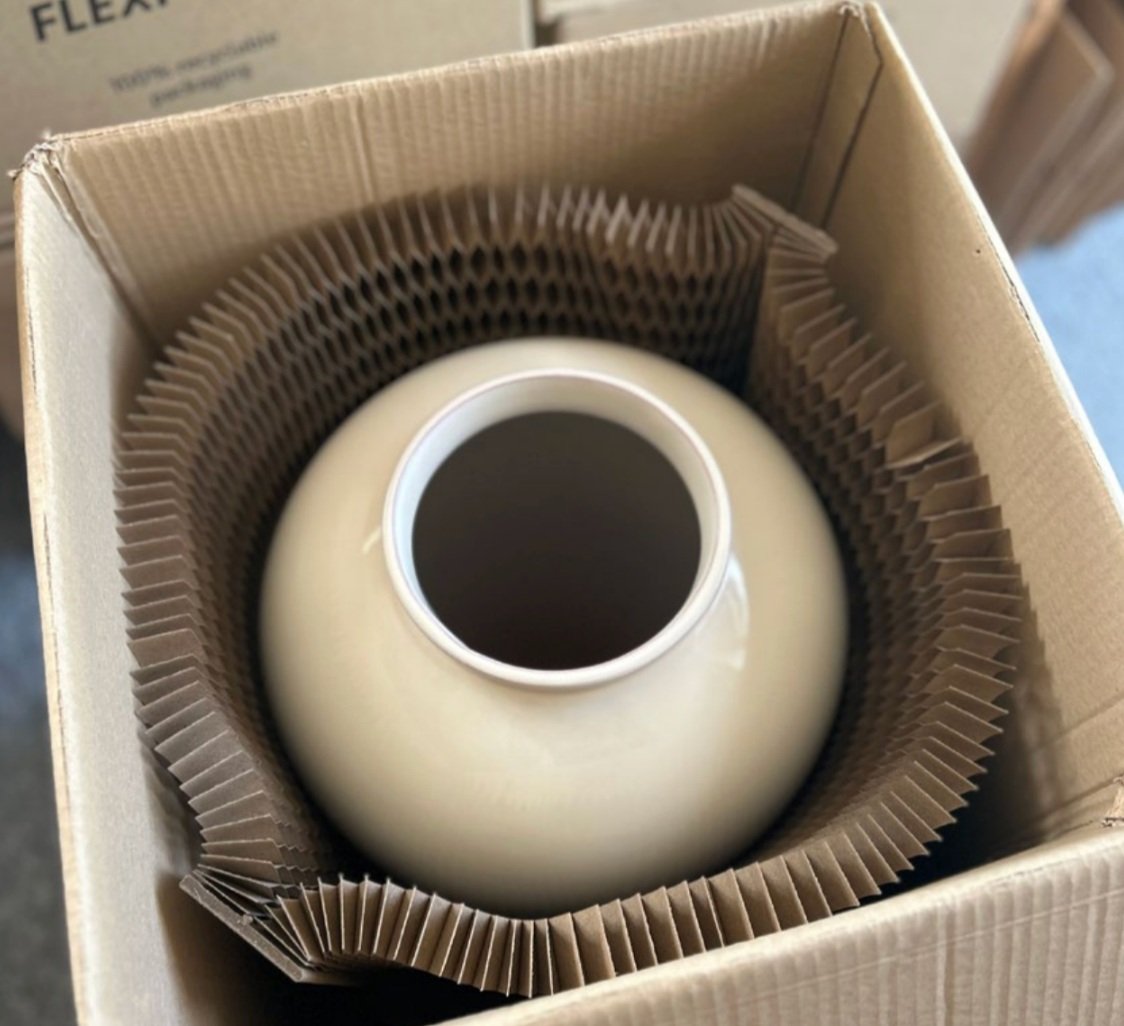
A protective sleeve isn’t a complete shipping pack on its own.
Flexi-Hex specifies an outer box for Air sleeves and recommends a snug-fitting carton. Where a suitable close-fitting box isn’t available, additional paper material may be needed to secure the sleeved product.
Check the complete arrangement before dispatch:
Does the protected item fit without forcing the box closed?
Can the product move inside the sleeve or carton?
Are separate pieces secured?
Can two fragile items come into contact?
Do the base and top of the pack provide the protection the product needs?
Does the carton remain securely closed during handling?
For a mug-and-saucer set or a mixed homeware order, assess each component and how they sit together. Don’t rely on filling the visible gaps as your only check.
Think beyond the cost of the packaging
When comparing packaging options, include the work involved in an unsuccessful delivery.
For your own business, record what a replacement actually requires:
Customer service time
Replacement stock or production time
A second set of packaging
Another delivery
Any claim or refund administration
You don’t need a complicated spreadsheet. Even a simple record can give you a more useful comparison than the price of a sleeve or carton alone.
It also helps identify where to focus a trial. Start with a product that is difficult to pack, regularly needs extra attention or would be particularly hard to replace.
Make protection feel considered, not excessive

Your customer should be able to see the care in the pack without having to work through unnecessary layers.
Flexi-Hex Air sleeves have a distinctive honeycomb finish and are made from 100% recycled tissue paper. They’re plastic-free and kerbside recyclable, giving you specific material credentials to communicate alongside the presentation.
They also store compactly before use — a useful consideration when packing space shares a room with stock, shelving or a workbench.
Compared with plastic bubble wrap, Air offers paper-based protection with a different visual finish. But the decision shouldn’t be based on appearance alone. Check how it performs within your complete pack and how straightforward it is to use.
Assess any added tape, liners or decorative materials separately before describing the entire shipment as plastic-free or recyclable.
Trial one product before changing the whole range
You don’t need to switch everything at once.
Choose one representative product and build a complete trial pack using the sleeve, carton and any additional protection you intend to use.
Then:
Check the fit. Look at the product’s body, edges, base and any exposed details.
Pack several examples. Note where the process is easy and where it needs adjustment.
Review the presentation. Open the pack as your customer would.
Trial a shipment. Use your usual delivery service and inspect the product and packaging on arrival.
Record the result. Photograph the arrangement and note anything that moved, marked or needed changing.
A successful trial is useful feedback, not a guarantee against future damage. Unusual shapes, heavier pieces and high-value products may need more specialised protection or formal transit testing.
The aim is to find a repeatable arrangement that suits your product — not simply a sleeve that stretches around it.
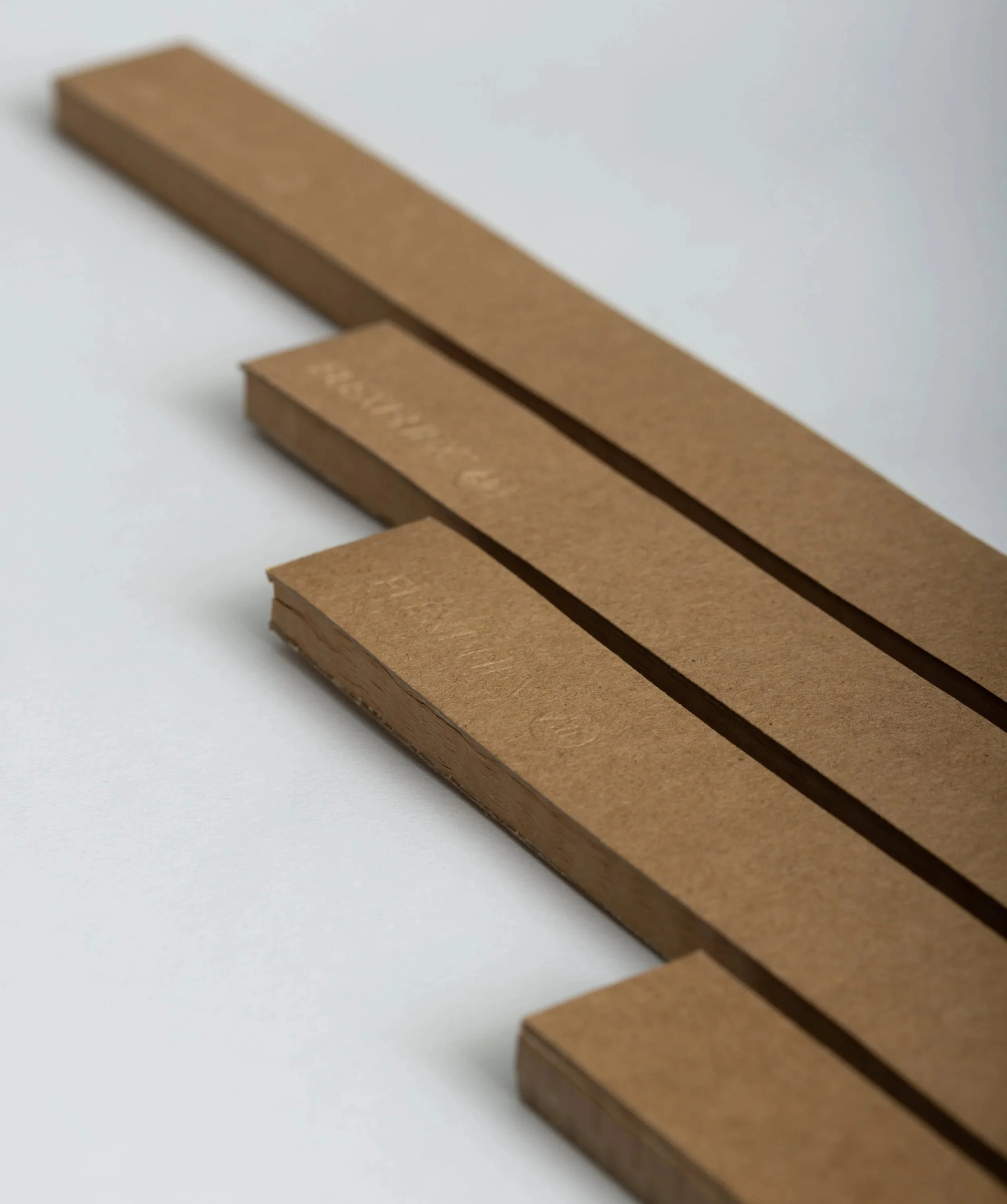
Give your work a considered send-off
You’ve put care into making or choosing the product. The packaging should carry that care through to delivery.
If you’re exploring paper-based protection for ceramics or homewares, start with a sample trial rather than a full-range change.
Send Woodhill Distribution a product photo, dimensions, weight and details of how you currently ship it. We can help identify a sleeve option to assess with your own products and outer boxes.
Woodhill offers an Air Sleeve Sample Pack, providing a practical starting point for checking fit and presentation before committing to a larger order.
Tell us what you’re shipping, and we’ll help you work out what to test.
