Flexi-Hex vs Bubble Wrap: How One Small Winery Saved $500 a Year on Single-Bottle Shipping
For busy cellar door and e‑commerce teams, packaging can feel like a fixed cost. But a small change – from bubble wrap to a purpose‑designed paper sleeve and shipper – can quietly shave real dollars off every order while lifting the customer experience. Here’s how that plays out for one New Zealand winery.
A typical NZ winery scenario
Imagine a small premium winery shipping single bottles of $80 Pinot Noir direct to consumers across New Zealand. The cellar door team sends around 10 online orders a week, every week of the year – 520 single‑bottle consignments annually.
Right now, each bottle is wrapped in bubble wrap, taped, then dropped into a standard single‑bottle carton. The winery is considering upgrading to Flexi‑Hex MINI sleeves and the 1-pack pinch‑top shipping boxes for a better unboxing experience and less plastic, but wants to understand the numbers first.
The “old” packaging setup
Under the existing system, the economics look like this.
Packaging materials (bubble wrap plus a generic box, labels and tape) cost around $4 per order, or $2,080 per year across 520 shipments.
Courier charges sit at $12 per order for nationwide delivery, adding another $6,240 per year.
With basic protection, around 2% of shipments are damaged in transit – roughly 10 orders a year. Each damage incident costs about $50 once the cost price of the wine, replacement freight and admin are counted, adding $520 per year.
Bulky cartons and void fill take up shelf and pallet space, costing around $100 per month in storage or $1,200 per year.
Packing is fiddly: wrapping the bottle, taping bubble wrap, adding filler and closing the box takes about 5 minutes per order, adding up to just over 43 labour hours per year; at $25 per hour, that’s $1,083 in labour.
Totalled up, this example winery is spending roughly $11,123 per year – about $21.39 per order – on packaging‑related costs for single‑bottle shipments.
Moving to sleeves and right‑sized boxes
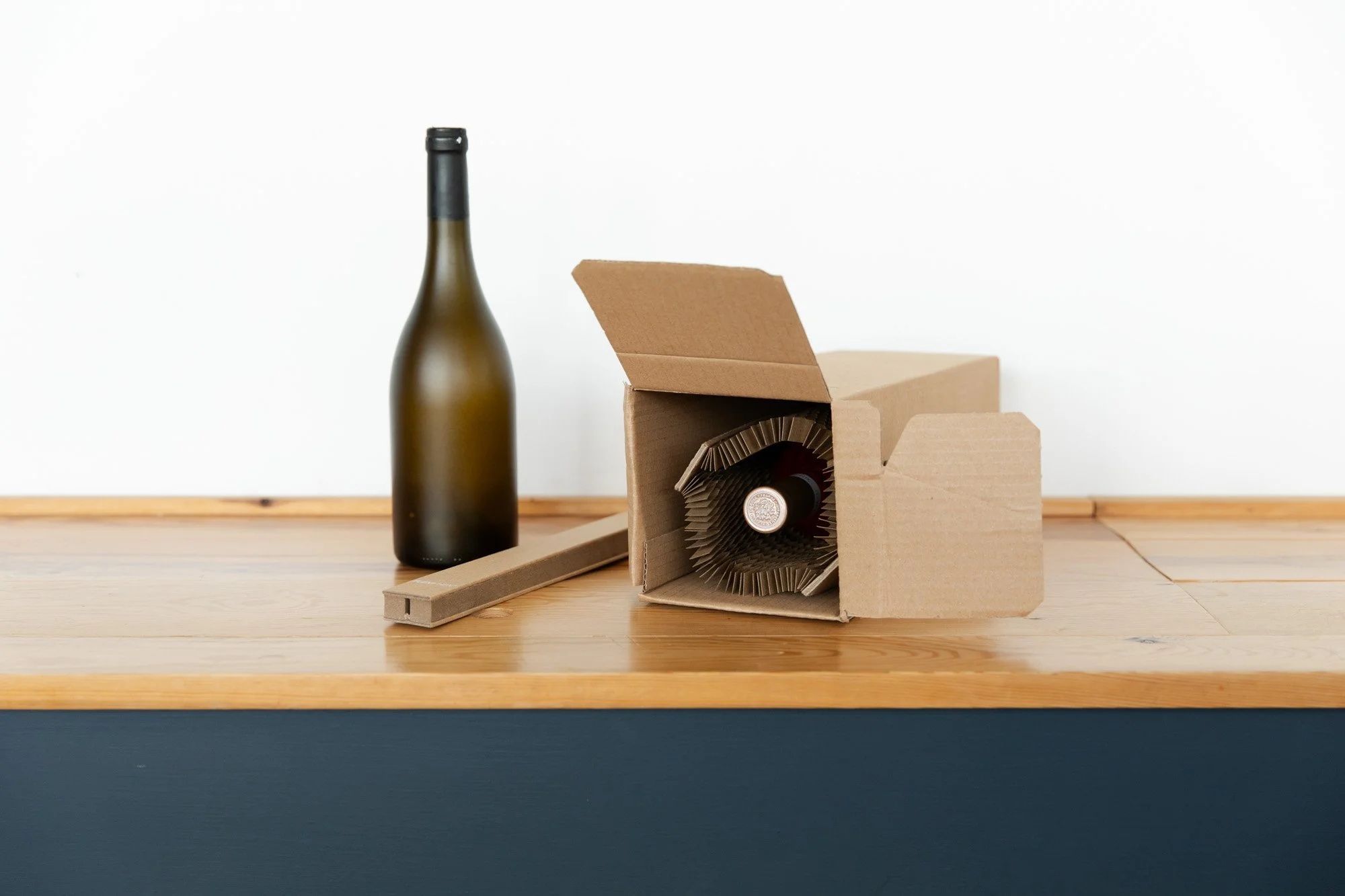
Now, swap the bubble wrap and generic carton for a Flexi‑Hex MINI sleeve and one‑bottle pinch‑top shipping box. The material cost per order rises, but the system becomes faster, more space‑efficient and far less prone to breakage.
A Flexi‑Hex MINI sleeve and 1‑pack pinch‑top box, plus labels and tape, cost around $6.59 per order; across the year, that’s $3,426.80 in packaging materials.
Courier charges remain at $12 per shipment, the same $6,240 per year as before.
The more protective, drop‑tested design reduces breakage to about 0.5% – roughly three damaged orders a year; at $50 per incident, damage cost drops to about $130 per year.
Flat‑packed sleeves and cartons drastically reduce storage needs, cutting the packaging storage bill from $1,200 down to $240 per year.
Packing is much simpler: slide on the sleeve, drop into the pinch‑top box, seal and label; assuming 2.5 minutes per order, annual packing time falls to 21.67 hours, and at $25 per hour labour cost drops to about $541.67 per year.
Altogether, the upgraded system costs about $10,578 per year, or $20.34 per order, for the same 520 shipments.
What the numbers actually say
Because courier costs are held constant at $12 in both scenarios, the savings come entirely from damage, labour and storage – even though the winery spends more on each pack.
Saving per order: $21.39 (old) vs $20.34 (new) = $1.05 cheaper per shipment with Flexi‑Hex sleeves and right‑sized boxes.
Saving per year: $1.05 × 520 orders ≈ $545 saved annually on this single‑bottle channel alone.
For a small winery, $500+ a year may not sound transformational on its own, but this example only covers one format (single bottles) and one sales channel. The same logic can scale across mixed packs, corporate gifting or seasonal campaigns where values are higher and presentation matters even more.
Beyond the spreadsheet
The financial case is only half the story. By switching from bubble wrap to a paper‑based protective system, the winery also:
Reduces plastic use and aligns its packaging with a broader sustainability story that customers increasingly expect from premium wine brands.
Lowers the hassle and reputational cost of “sorry, your bottle arrived broken” emails and the admin that follows.
Delivers a more premium unboxing experience that matches the quality of the wine inside – turning a routine shipment into a small, memorable brand moment at the customer’s kitchen bench.
For wineries where every bottle carries the brand, a modest per‑order saving plus a better customer experience is a strong signal to revisit packaging – especially when the impact can be modelled clearly, as in this example.