
Comparing paper honeycomb sleeves to traditional foam inserts

They are familiar. They fit neatly into a carton. And when you have a consistent product shape, a moulded insert can hold it firmly in place.
But foam creates its own set of problems.
It takes up warehouse space. It is often made for one bottle, jar, device or product shape. It can make a premium parcel feel overly industrial. And for the customer opening the box at home, it can create a disposal question: What exactly am I meant to do with this?
That is why more wineries, distilleries, beauty brands, homeware businesses and premium e-commerce retailers are looking at paper honeycomb sleeves as an alternative.
The goal is not simply to replace foam with paper. It is to choose a packaging system that protects the product, suits the way you pack orders and makes sense once it reaches your customer.
The practical difference
Traditional foam inserts are usually cut, moulded or formed to hold a particular product in a particular carton. That can work well when the product dimensions are fixed and volumes justify a dedicated insert.
Paper honeycomb sleeves work differently.
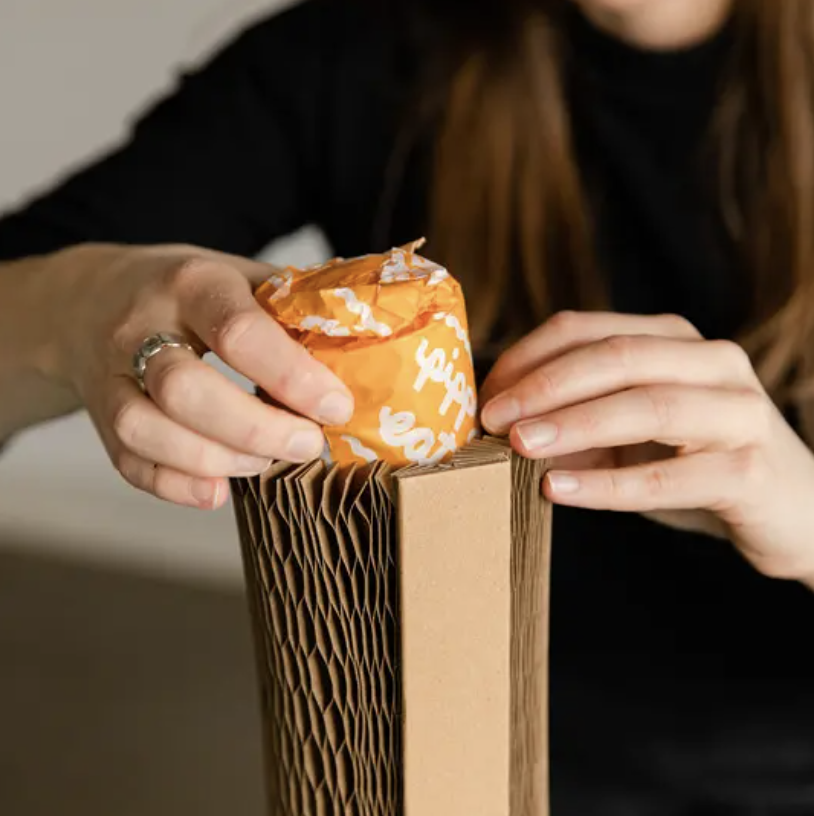
Flexi-Hex sleeves arrive compressed, then expand around the product during packing. The honeycomb paper structure creates a close-fitting protective layer around bottles, jars, cosmetics, electronics, ceramics and other fragile items. For larger formats, sleeves can also protect boards, homewares, furniture and artwork.
That adaptive structure matters when your product range is not perfectly uniform.
A winery may ship several bottle shapes. A beauty brand may have different bottle heights, jar diameters and gift-set combinations. A homeware business may have products that vary slightly from collection to collection. Rather than holding separate foam inserts for every variation, a sleeve-based system can give you more flexibility — provided the sleeve size, outer carton and packing method have been selected for the product.
Side-by-side comparison
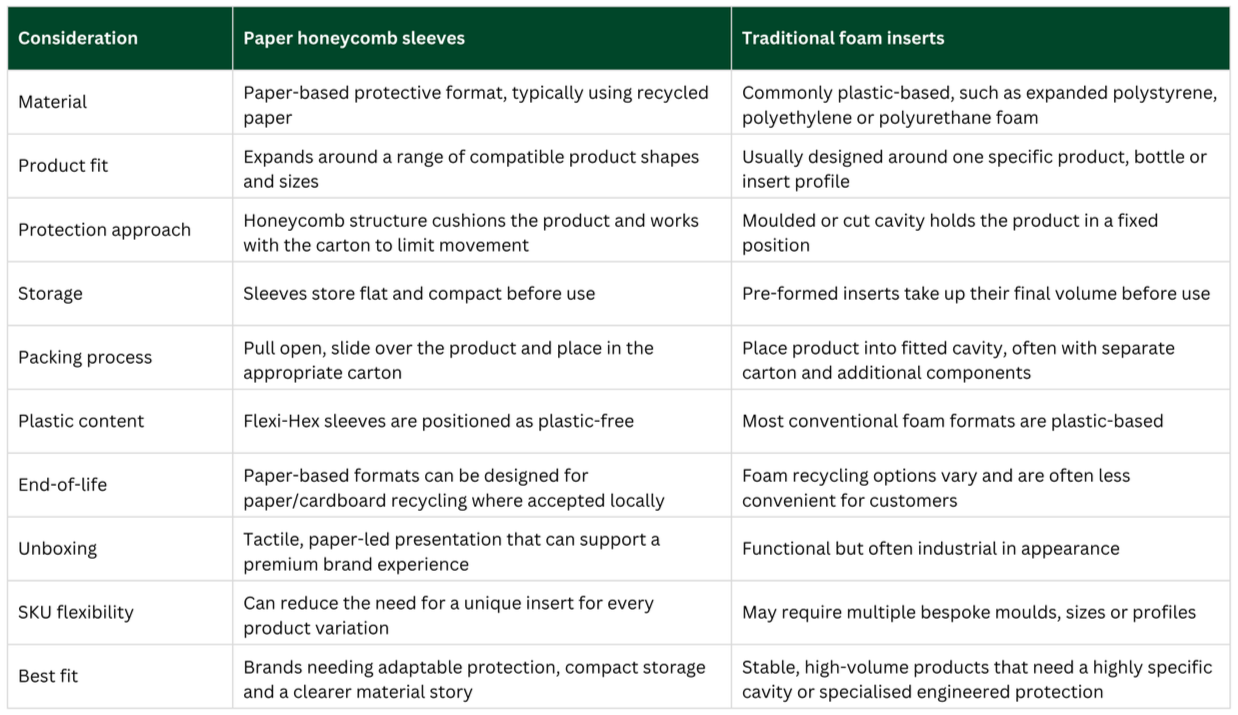
The comparison is not a licence to assume every paper sleeve will outperform every foam insert. Packaging performance depends on the product, carton, packing method, shipping route and handling conditions. The useful question is: which system protects your product reliably without creating unnecessary cost, storage or disposal friction?
Storage space is usually where the conversation gets interesting
Foam inserts are shipped and stored in the shape they will be used.
That is fine if you have plenty of space and a predictable, high-volume product line. It is less appealing when you are working from a small warehouse, a cellar door, a packing bench or a back room where every pallet position counts.
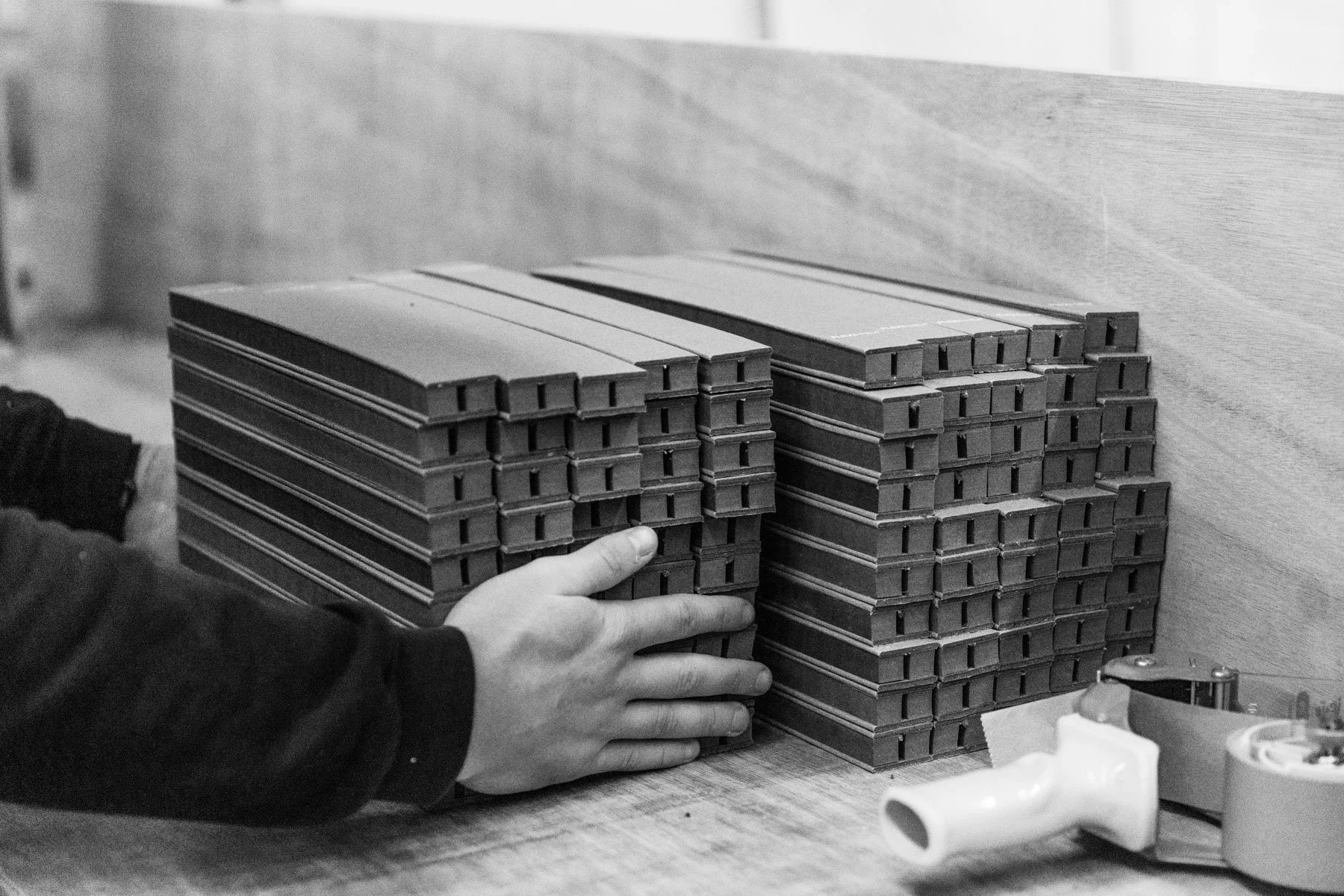
Flexi-Hex sleeves are supplied in a compact format and expand when packed. Woodhill’s product information states that certain Flexi-Hex formats can expand up to around 35 times their packed size, creating a snug protective fit around the product.
For a busy operator, that can mean:
Less warehouse space tied up in pre-formed packaging
Fewer bulky inserts to move around the packing area
More flexibility when product formats change
A simpler way to hold protective packaging for seasonal peaks, gifting periods or export runs
This does not automatically mean lower total cost. You still need to compare the full cost-to-serve: packaging, storage, picking, packing time, freight, damages and replacements. But storing protection flat rather than as a pallet of shaped foam is a meaningful operational advantage for many smaller and mid-sized NZ brands.
Protection is about the system, not the material alone
A common mistake is to compare a sleeve directly with a foam insert without considering the complete pack.
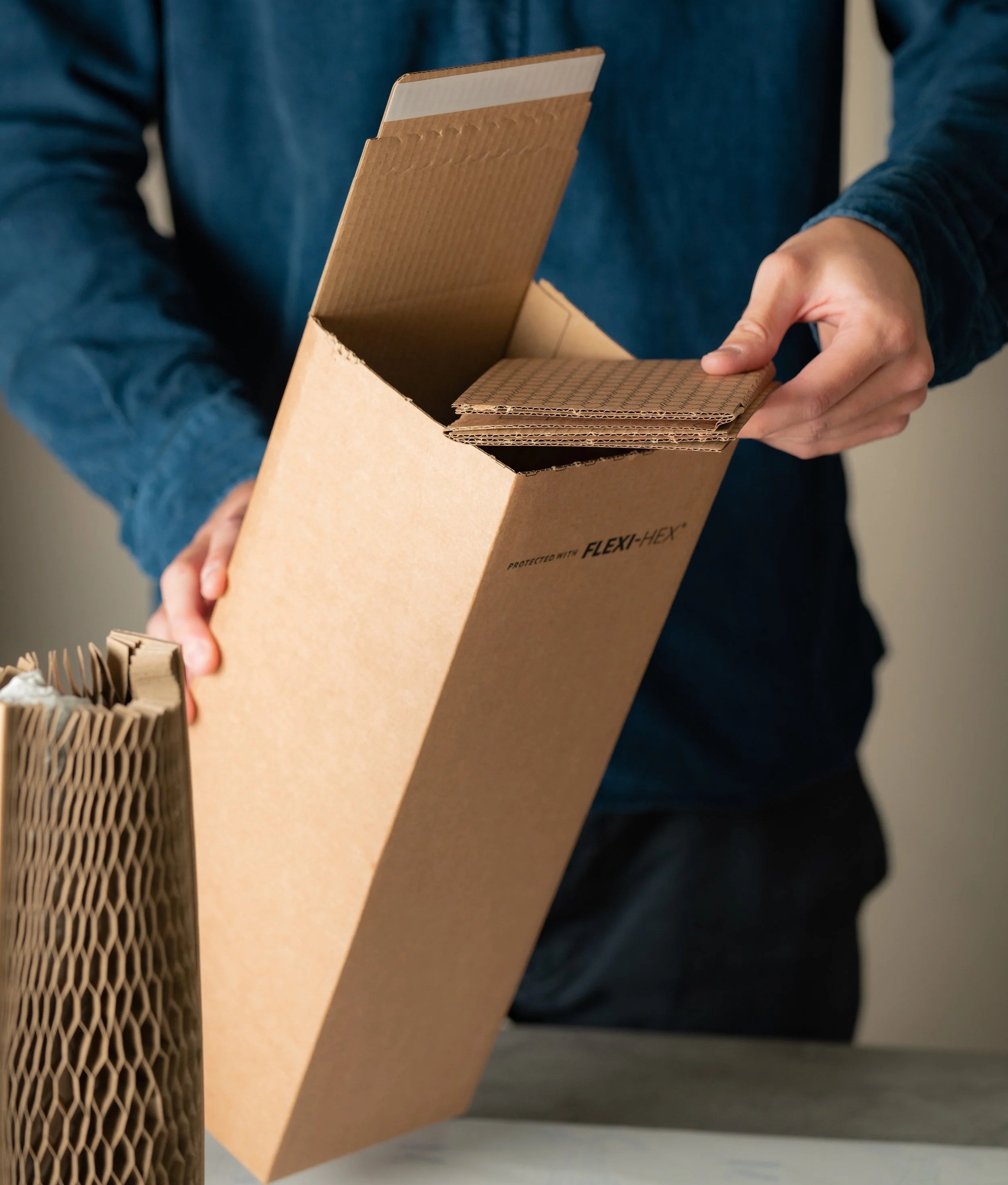
A protective sleeve needs the right outer carton. A bottle format may need a purpose-designed base pad, divider, pinch-top closure or fold-top box to limit movement in transit. A larger product may need the right sleeve grade, corner protection and outer packaging.
That is why Woodhill recommends matching the Flexi-Hex format to the product and trialling the full packaging configuration in the courier network before scaling.
Flexi-Hex bottle packaging is designed to combine an expandable honeycomb sleeve with purpose-built outer cartons. The company’s Pinch Top system uses a sleeve, self-sealing cardboard box and protective base layer, with the top pinch intended to reduce movement during transit.
For relevant bottle configurations, Woodhill also states that most Flexi-Hex bottle packaging solutions are independently tested to the ISTA 3A transit standard. Confirm the exact SKU, carton and packing configuration before making this claim in your own customer material.
What your customers see matters
Foam is usually invisible until the parcel is opened. Then it becomes waste the customer has to deal with.
That might be acceptable for industrial equipment or a technical product where the buyer expects a highly engineered protective insert. But it can work against the experience you are trying to create if you sell a premium bottle of gin, a curated wine subscription, skincare, ceramics or a considered gift.
Paper honeycomb has a different visual and tactile effect. It looks intentional. It communicates that care has gone into the delivery, not only the product inside it.
For premium brands, that matters because packaging is part of the product experience. The customer does not separate the quality of your product from the condition it arrives in, or from the amount of difficult-to-dispose-of material left on their kitchen bench afterwards.
Flexi-Hex is a plastic-free, recycled-paper packaging option that is kerbside recyclable, biodegradable and home compostable for relevant formats. That gives brands a clear material story to communicate — rather than relying on broad sustainability language that customers and retailers increasingly question.
When foam may still be the better option
A fair comparison needs to acknowledge that foam remains appropriate in some applications.
Foam inserts may be the better fit where:
A product has a highly complex, irregular or precision-engineered shape
The product is exceptionally heavy, sensitive or high value
A tightly controlled fixed cavity is required
The business ships one product format at high enough volume to justify a custom mould
The product needs specialist protection from vibration, static, moisture or temperature
Existing testing shows that a foam design is the most reliable configuration for the shipping route
Paper honeycomb sleeves are not a one-size-fits-all answer. But they are often a stronger option where your priority is a flexible, paper-led system that protects fragile products while reducing plastic and storage bulk.

The better decision framework
Instead of asking, “Is foam more protective than paper?”, ask these five questions:
Does the packaging protect the product in our actual courier network?
Trial the completed pack, not just the protective material in isolation.How many product shapes and sizes do we need to pack?
If your range changes regularly, a flexible sleeve can reduce dependence on custom moulds and multiple foam SKUs.How much warehouse space does the packaging consume before we use it?
Pre-formed foam can be storage-heavy. Compressed honeycomb sleeves are designed to store compactly.What will the customer do with the packaging after opening?
Make disposal instructions as clear as the product itself.Does the packaging make our product feel more, or less, premium?
Protection is non-negotiable. Presentation is still part of the commercial decision.
The best packaging choice is the one that protects what you make, works at your packing bench and supports the brand you have worked hard to build.
For brands shipping fragile products across New Zealand, Flexi-Hex offers a practical paper-based alternative to traditional foam inserts. Talk to Woodhill Distribution about the right sleeve, carton and trial approach for your product before making the switch.
