
You’ve put care into what goes inside the bottle or jar. Choosing the right glass, designing the label and getting the finished product ready for sale all take work.
The shipping pack should carry that care through to delivery.
For olive oil, vinegar, preserves, honey and other specialty foods, that means more than finding a box with enough room. The weight of the filled containers, their shapes and the way they sit together all need consideration.
Start with three questions:
What do you ship?
How is it packed now?
Where could protection, presentation or the packing process improve?
Those answers give you a useful starting point for a packaging review — whether you’re sending a single bottle from your online store or assembling a mixed food gift.

Start with the finished product
A tall olive oil bottle and a wide preserve jar present different packing jobs. Even containers with the same capacity can have different dimensions, closures and filled weights.
Assess the actual product you intend to send, including its lid, pourer, label and any retail presentation packaging.
Record:
Overall height, including the closure
Widest diameter or external dimensions
Filled weight
Any projecting or unusually shaped features
Labels or finishes you want to keep looking their best
Whether it travels alone or with other products
If you use several bottle or jar shapes, check each one. Don’t assume that a pack which suits one product will suit the rest of the range.
This information also makes it easier for a packaging supplier to recommend an option worth trialling.
Look at how you pack it now
Before changing materials, build one of your usual orders and examine the complete arrangement.
What sits around each glass container? What keeps it in position? Are there separate protective layers, dividers or inserts? How much adjustment is needed before the carton closes?
Then identify what you want to improve.
It might be:
Glass items moving or touching
Labels arriving marked
Too much plastic wrapping
A large carton with substantial unused space
Inconsistent presentation
Bulky packaging storage
A packing process that takes too much adjustment
Be specific. “We want better packaging” is a broad brief. “We want a repeatable way to pack two oil bottles without wrapping each one in several layers of plastic” is something you can assess.
Where Flexi-Hex fits
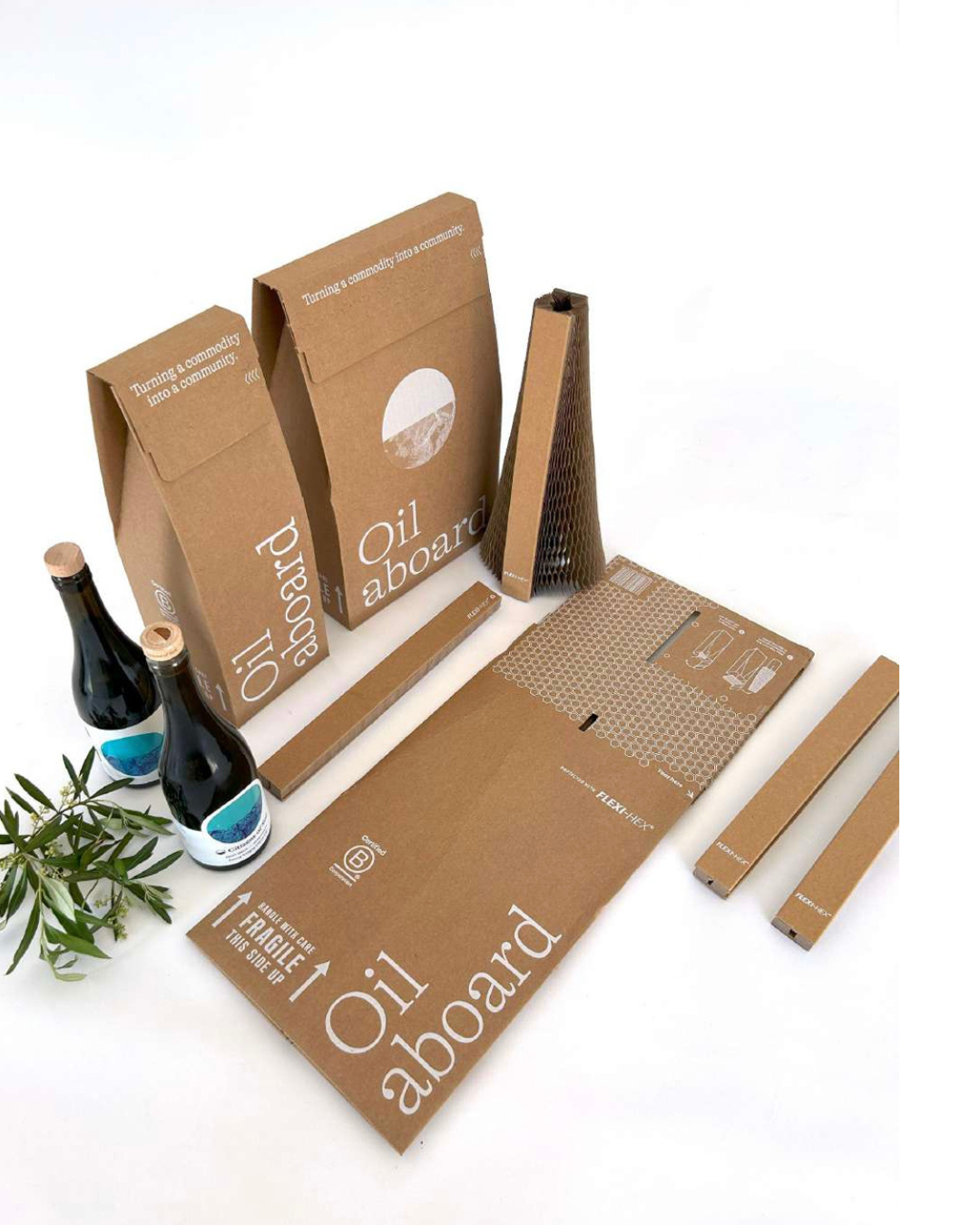
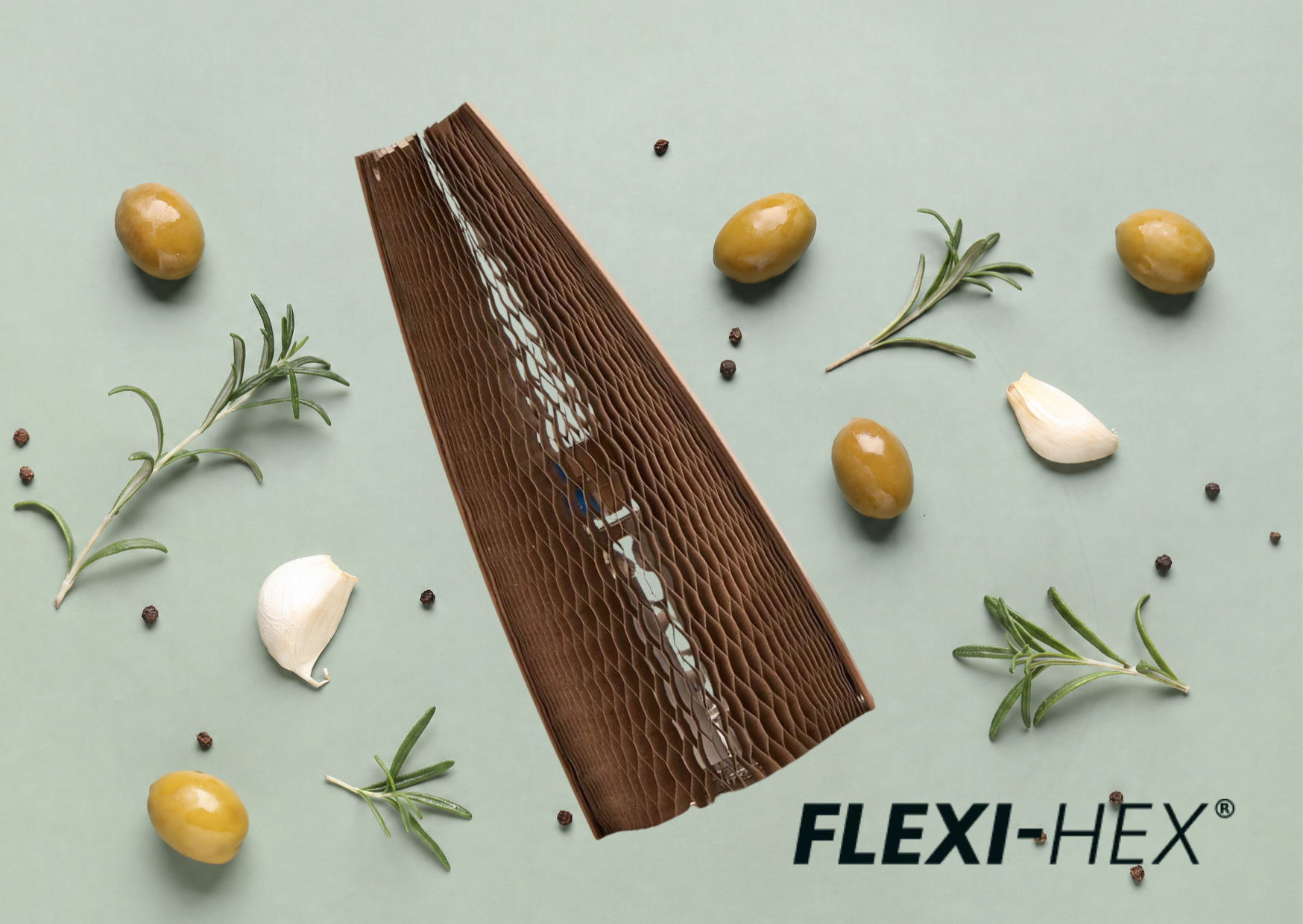
Flexi-Hex uses an expandable honeycomb paper sleeve around the product. Combined with an appropriate outer carton, it offers a paper-based protective arrangement for suitable glass bottles and jars. Woodhill Distribution already supplies this approach for olive oil bottles, including individual orders, multiple-bottle shipments and gifting formats.
The sleeve is one component of the pack, not a replacement for assessing the whole shipment.
The appropriate sleeve and carton depend on:
The product’s shape and filled weight
The number of items in the order
The space available for protective material
The arrangement of products inside the carton
The delivery route and handling requirements
For a bottle or jar that suits the format, a sleeve can provide a defined protective layer without relying on repeated wrapping. The right configuration still needs checking with your actual products.
A wine-bottle carton shouldn’t automatically be assumed suitable for an olive oil bottle. Likewise, a sleeve that fits around a jar doesn’t, by itself, confirm that the complete shipping pack is appropriate.
Give mixed food orders their own check
A single-product order is a useful place to start. Mixed selections need a separate assessment.
An oil-and-vinegar pairing may contain bottles of different heights. A gift selection might combine a heavy jar, a narrow bottle and a boxed food item.
Build the combinations you regularly sell, then check:
Each glass item has appropriate protection
Fragile containers remain separated
Smaller items cannot move freely into larger ones
The base and top of the arrangement are properly supported
Additional items don’t interfere with bottle or jar protection
The carton closes without forcing or bulging
A neat arrangement on the bench isn’t enough. The products need to remain appropriately positioned once the carton is closed and handled.
If you’re adding a gift card or tasting note, include it in the trial rather than treating it as an afterthought.
Keep presentation consistent with the product
A premium food delivery doesn’t need elaborate decoration to feel considered.
It can be as simple as a well-fitted pack, an undamaged label and a short note explaining the product or the producer behind it.
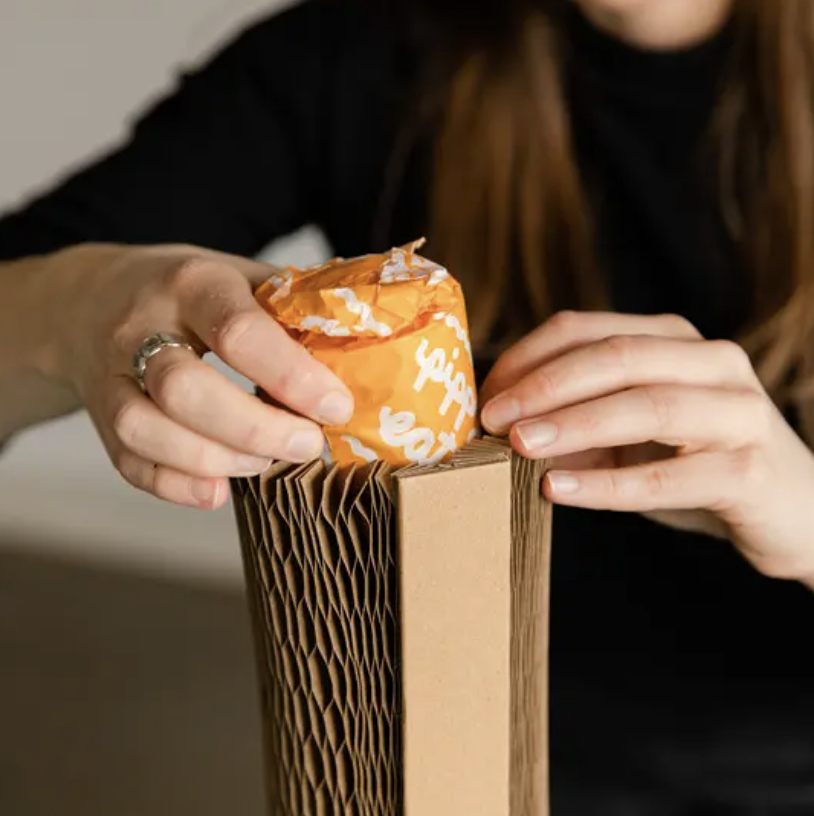
Flexi-Hex’s honeycomb paper structure provides a distinctive, tactile finish. Woodhill positions its olive oil packaging around both protection and a considered unboxing experience, rather than simply filling empty space.
Open the trial pack as your customer would.
Is it clear what to remove first? Can they lift out the product comfortably? Are useful details easy to find? Have decorative additions made unpacking unnecessarily complicated?
For a direct-to-consumer order, the product should remain the focus. For a gift, a clearly placed message may add more value than another layer of wrapping.
Be clear about what the packaging does
This review concerns protection around finished, sealed products during shipping.
Treat the container, closure and transit protection as separate checks. A protective sleeve does not establish that a bottle is leakproof, that its closure is suitable or that a food product’s temperature requirements are being met.
If leakage, temperature control or another product-specific requirement is part of your shipping challenge, raise it at the start of the discussion. Don’t assume a cushioning change will solve it.
The useful brief is the whole problem — not just the material you want to replace.
Include packing time and storage
A suitable pack also needs to work for the person assembling the orders.
Trial the full process: collecting the components, applying protection, arranging the products, adding paperwork and closing the carton.
Note any repeated adjustments. Can another person follow the same method? Does a mixed order need a separate packing guide?
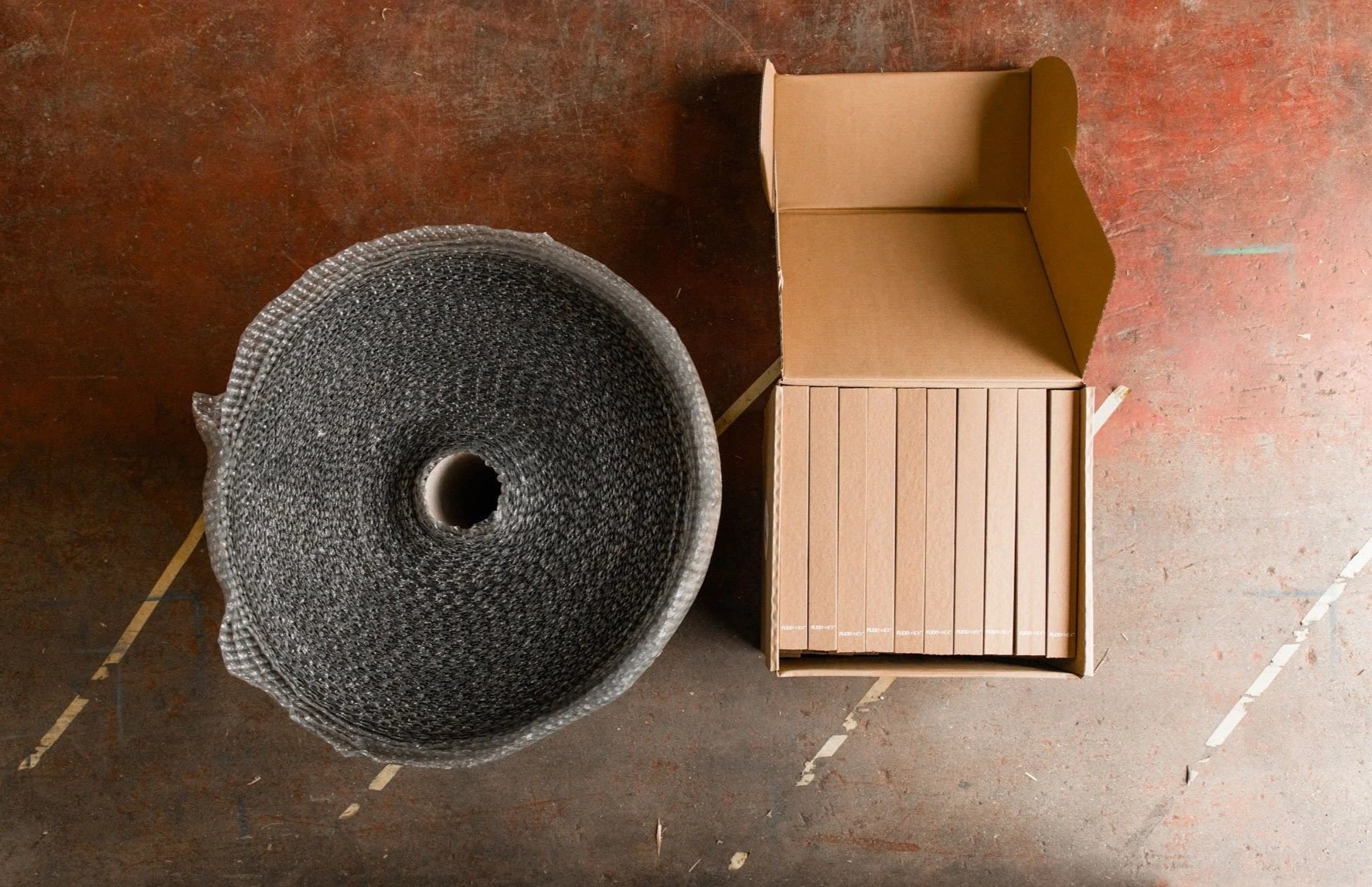
Flexi-Hex sleeves store compactly before expansion. That can make them worth assessing where bulky rolls of wrapping or large quantities of shaped inserts are putting pressure on storage space.
Compare the complete setup rather than the sleeve alone. Outer cartons, inserts and finished orders all need somewhere to go.
Trial one regular order before changing the range
You don’t need to redesign every format at once.
Choose a representative order — perhaps your most common bottle size, a two-bottle pairing or a jar selection that currently needs extra attention.
Then:
Record your current pack. Photograph it and note the components and packing steps.
Build the proposed alternative. Use the actual filled products, sleeves, carton and any additional protection.
Compare the process. Look at fit, handling, presentation and storage requirements.
Send a representative trial. Use your usual delivery service and arrange to inspect the shipment on arrival.
Review and adjust. Check for movement, damage, label marks and changes to the intended presentation.
A successful trial provides useful feedback, not a guarantee against damage. Different container shapes, order combinations or delivery routes may need their own assessment.
Tell us what you’re shipping
If you’re reviewing packaging for olive oil, vinegar or specialty foods in glass, start by showing us a real order.
Send us:
A product photo
Container dimensions and filled weight
Your usual order combinations
A photo or description of your current packaging
What you’d most like to improve
Whether the priority is bottle protection, less plastic, more consistent presentation or a simpler packing process, we can help identify a Flexi-Hex sleeve and outer-carton option to assess.
Start with one format. Check the fit. Trial the complete pack before committing to a wider change.
