
A wine club delivery is more than a box of bottles. It’s a regular moment of connection between your winery and the people who have chosen to hear from you — vintage after vintage, release after release.
That makes the packaging worth a closer look. If bottles arrive damaged, move around inside the carton or are surrounded by layers of plastic, the delivery can feel out of step with the care that went into the wine.
For winery teams, there’s another consideration: club shipments need to be repeatable. The format should protect the bottles, make sense for the order size and be practical for the people packing it.
Start with your regular club formats
Before changing your packaging, look at what members actually receive. Do most shipments contain two bottles, three bottles or six? Are mixed varietals common? Do you include a tasting note, newsletter or gift item? Do some releases use bottles with different shapes or weights?
Write down your most common order formats and check:
Bottle count and bottle dimensions
Filled weight and any differences between bottle types
How bottles are currently held apart and protected
Whether bottles can move inside the sealed carton
How long the team spends preparing a typical club order
What members say about the packaging when it arrives
This gives you a practical baseline. It also helps you choose a meaningful trial instead of trying to redesign every shipment at once.
Individual bottle protection can change the pack
A standard wine carton and divider grid can separate bottles, but the way a parcel is handled in a courier network may differ from pallet transport. Bottles can be stacked, turned or knocked during sorting and delivery. The outer carton matters, but so does what happens inside it.
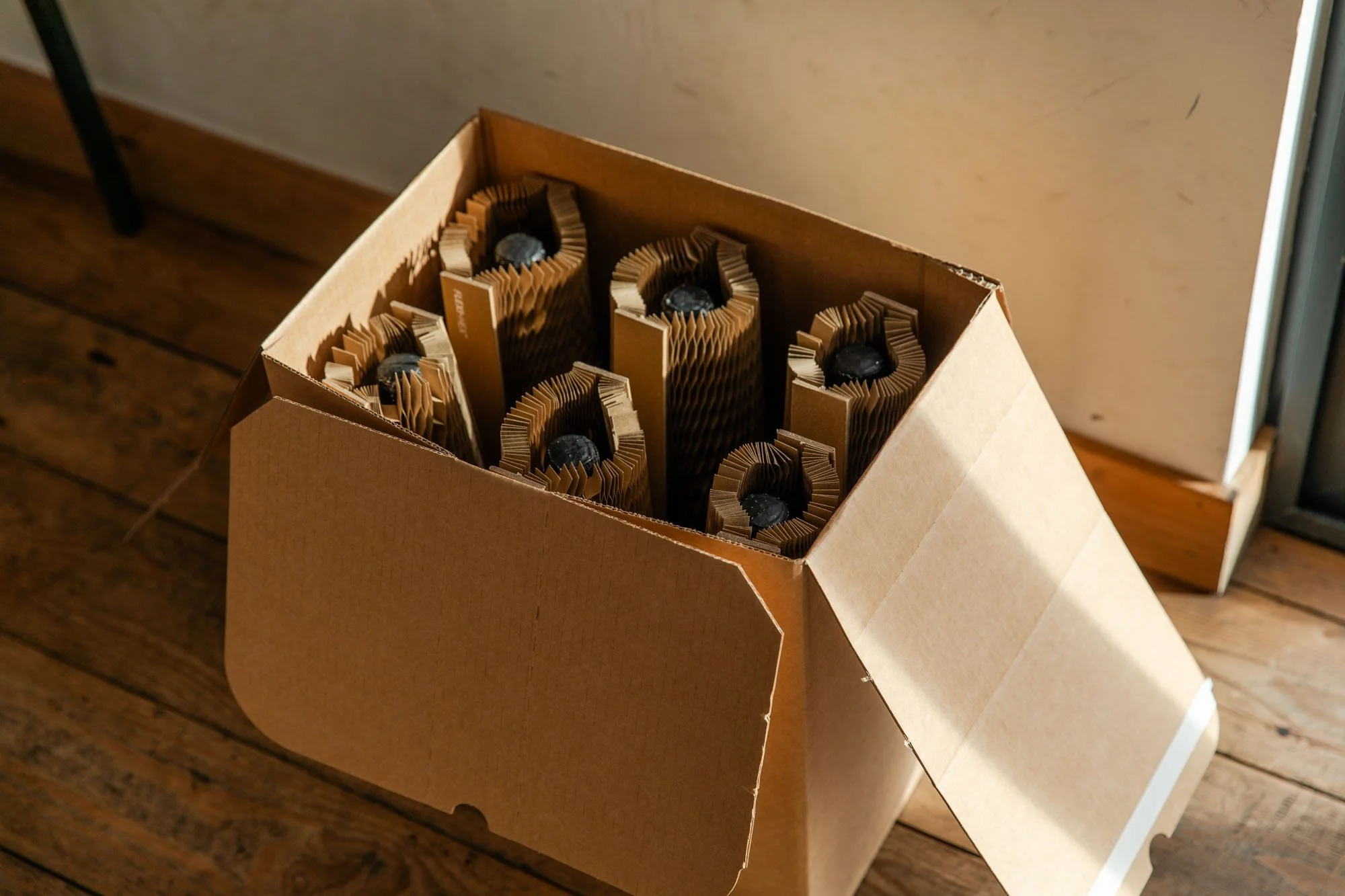
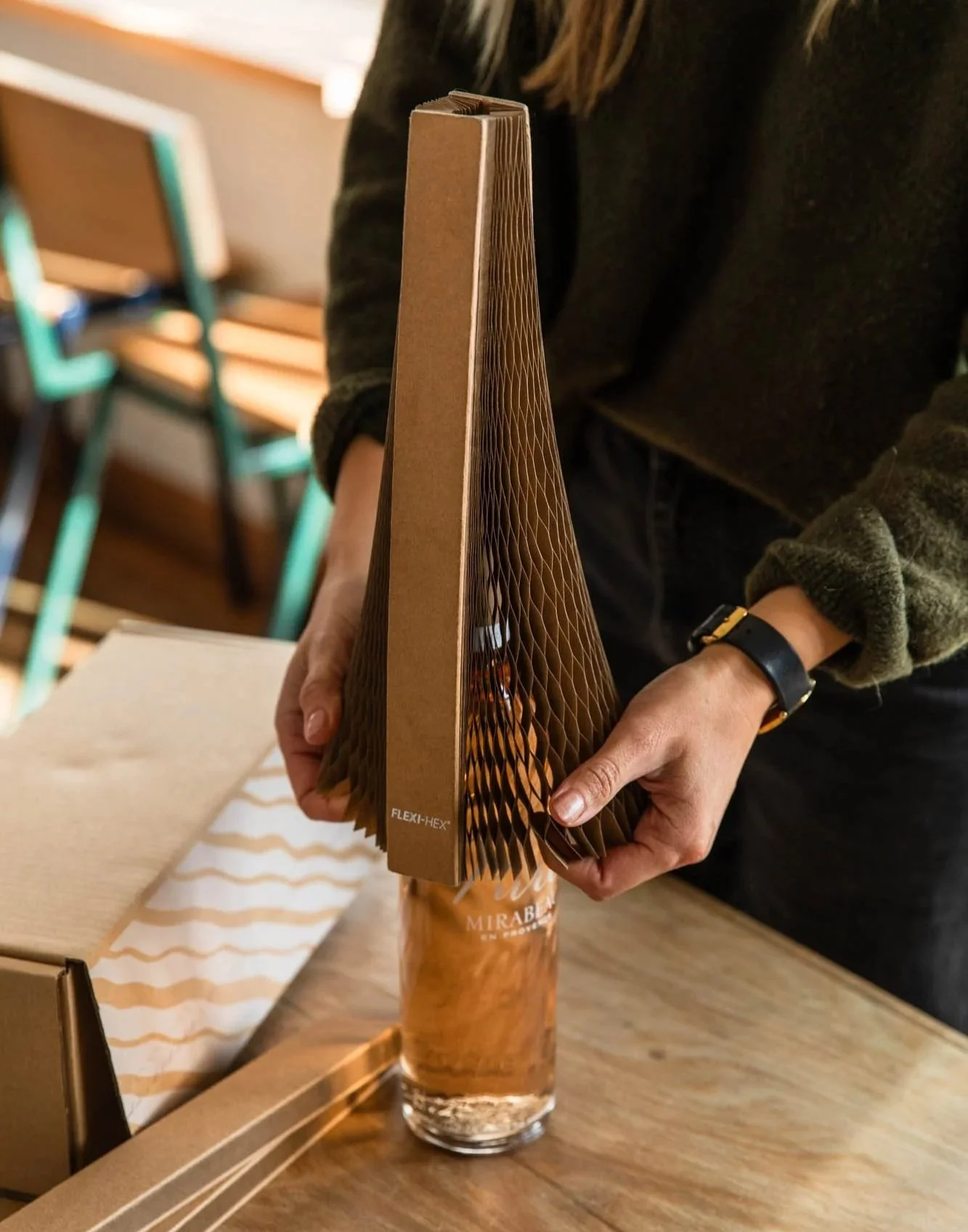
Flexi-Hex pairs an expandable honeycomb paper sleeve around each bottle with a compatible cardboard bottle box. Woodhill offers formats for single, two, three and six bottles; its wine packaging guidance identifies two- and three-bottle cartons for wine clubs, mixed packs and tasting bundles, and six-bottle cartons for larger club dispatches.
The sleeve is designed to grip around the bottle and provide a protective layer. The carton and packing method still need to suit the bottles and the shipping route. Confirm dimensions and trial the complete pack with your actual club format before standardising.
Match the packaging to the club experience
A club parcel is an extension of the winery. It should feel considered when a member opens it, without adding unnecessary complexity for the team.
A neat, paper-based bottle pack can help create a cleaner presentation than loose plastic wrap or uncontained void fill. Flexi-Hex sleeves are made from recycled paper and are kerbside recyclable; check the specifications and local disposal guidance for every other component before describing the entire parcel as recyclable.
The outer carton is also part of the experience. A right-sized box can help keep the contents together and avoid the impression that the wine has been packed into whatever happened to be available. If you include tasting notes or release information, position them so the member sees the winery’s message as they open the pack.

Make fulfilment repeatable
Wine clubs create predictable peaks: release dates, seasonal offers, new-member packs and gifting periods. A pack that works for one bottle count may not be right for another, so map your main order types before selecting formats.
A small number of tested configurations may be easier to manage than a collection of improvised combinations. For example, you might test a two-bottle format for a standard club release, a three-bottle format for mixed selections and a six-bottle option for larger orders. Whether these are suitable depends on your bottle dimensions, order mix, carton requirements and courier process.
During the trial, ask packers to note any awkward steps, fit issues or variation between orders. Practical feedback from the packing bench is just as useful as customer feedback from the doorstep.
Run a small, useful trial
You don’t need to change every carton to learn whether a different format suits your club shipments.
Choose one frequent order format, such as a two- or three-bottle club pack.
Pack it using your current method and a proposed Flexi-Hex sleeve-and-box format.
Check that each bottle fits, the carton closes correctly and the contents are held as intended.
Send trial parcels through your normal courier process.
Compare damage reports, packing feedback and member comments over an agreed period.
Keep the test fair: use typical bottles, packers and delivery destinations. The aim is to find out whether the proposed format works for your operation, not to rely on a general claim.
A better club shipment starts with the details
If you’re reviewing wine club packaging, start with your most common bottle count and the bottles you ship most often. Share the bottle dimensions, filled weight, order format and current carton with Woodhill Distribution, and we can help you assess a Flexi-Hex configuration to trial.
Your members signed up for the wine. The delivery is part of how they experience it. Make sure the carton, protection and presentation all feel like they came from the same winery.
