
Wine Box Packaging NZ: What Actually Survives the Courier Network?
If you only ever saw your wine cartons at the packing bench, you’d think most packaging was “good enough”. A standard cardboard box, a divider grid and a bit of bubble wrap still look tidy when they roll off the line. The problem is that courier networks don’t treat those cartons the way your team does – and most “wine box packaging” in New Zealand is still designed for pallets, not for life in a courier cage.
This piece walks through what really happens to a carton once it leaves the winery, where most damage actually occurs, and which types of wine box packaging tend to survive the trip.
The reality of NZ courier networks
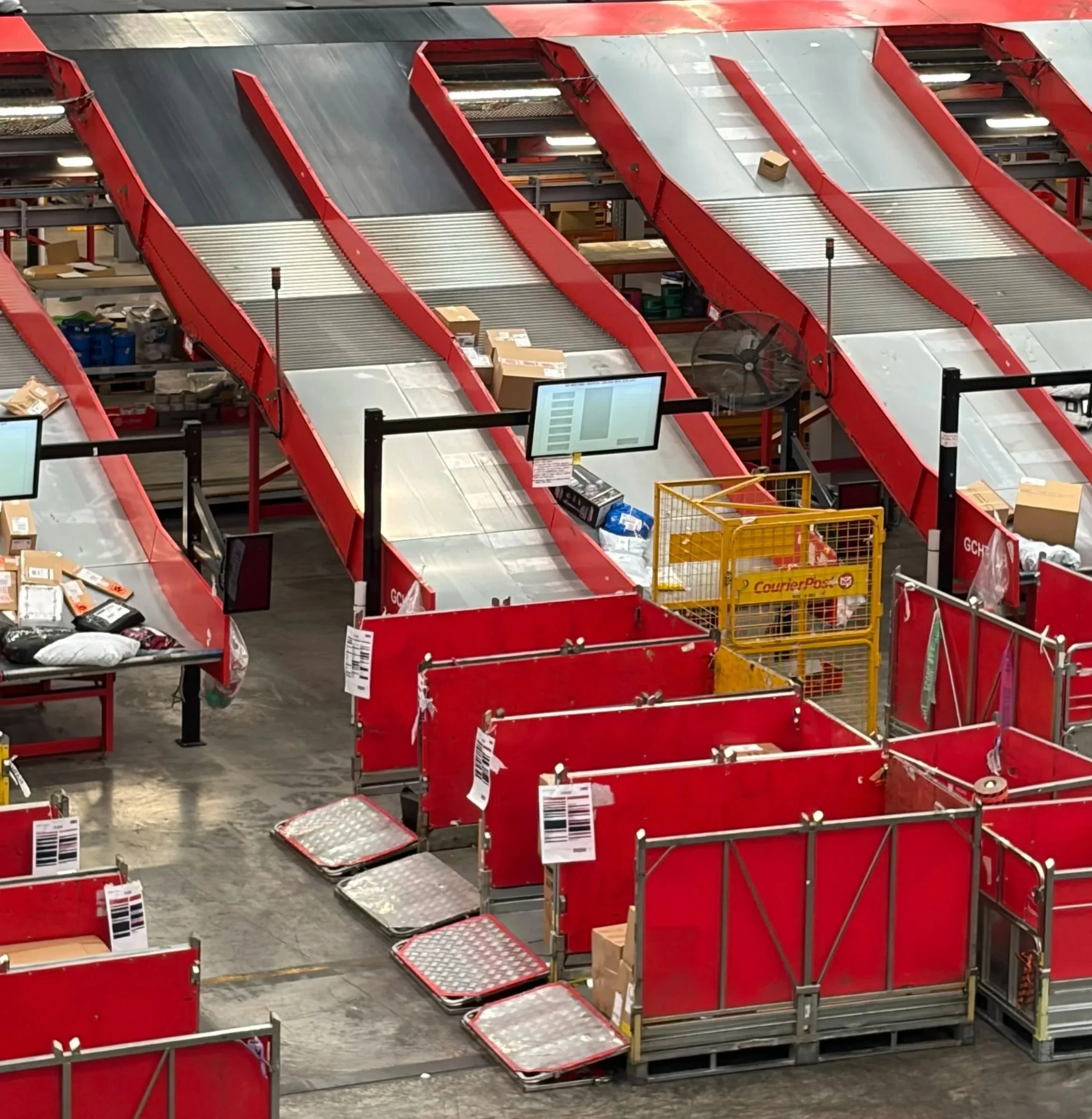
In a modern parcel network, cartons are handled dozens of times before they reach your customer. They move along conveyors, tip onto slides, drop between levels, get stacked sideways in cages and squeezed into small vans on rural runs.
Most breakages don’t happen in the back of the local courier’s van – they happen upstream, when boxes meet vibration, side impacts and changes in orientation at depots and hubs. If your wine packaging only works when cartons stay perfectly upright and gently handled, it’s not actually fit for this environment.
What fails first with “standard” wine cartons
A typical six‑ or twelve‑bottle carton with a corrugated divider grid was never designed for fast parcel networks. The divider grid mainly stops bottles rubbing against each other; it doesn’t create a protective shell around the glass, and it doesn’t lock the neck in place.
That means three weak points show up quickly:
Crushed corners and panels – when cartons are stacked or wedged in sideways, the board can deform and push bottles against each other.
Neck and shoulder impacts – the thinnest part of the bottle is often left exposed, so a short drop or side hit can chip or crack glass there.
Internal movement – any empty space inside the carton lets bottles build momentum and knock into dividers and box walls.
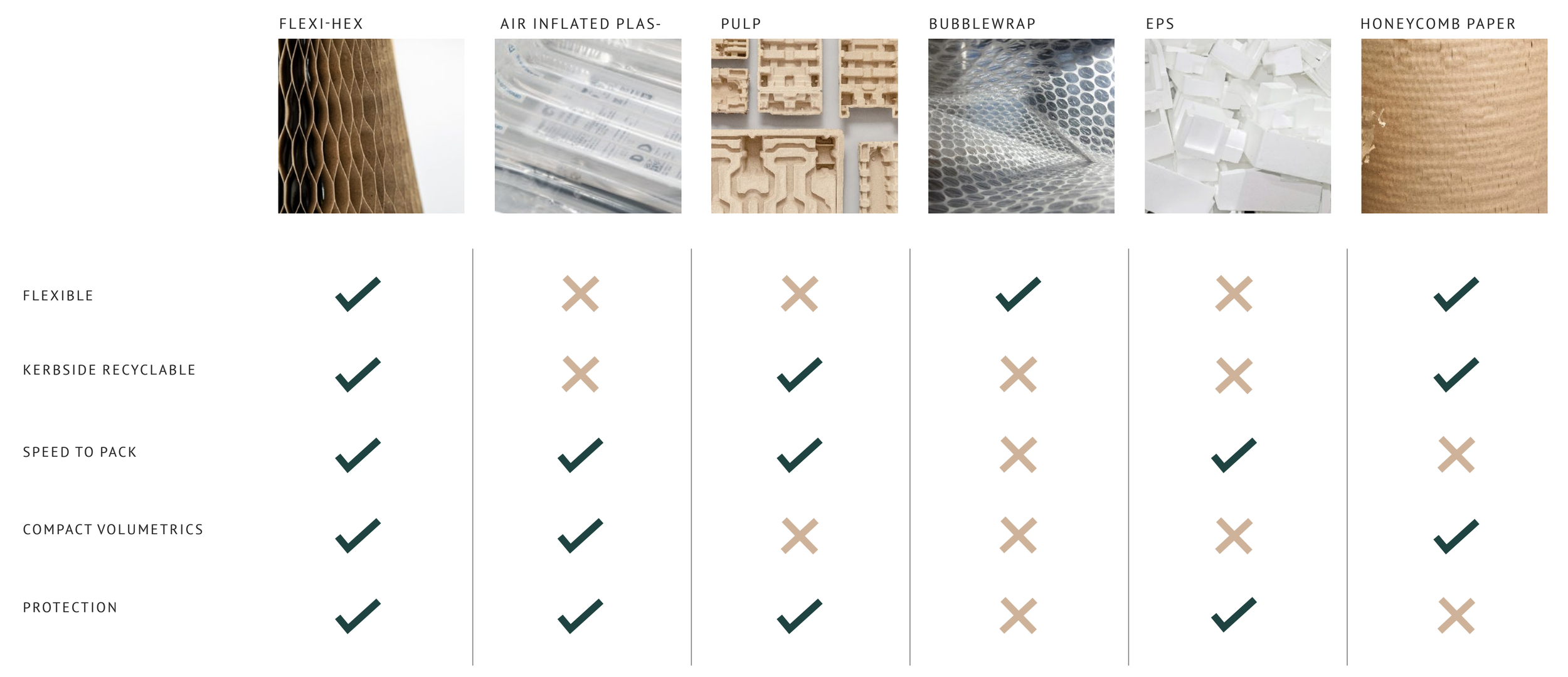
Add a layer of bubble wrap and you might buy a little more cushion, but you’ll also slow down packing and fill the box with plastic your customers can’t easily recycle.
Bubble wrap and loose fill: a familiar compromise
Bubble wrap and plastic loose fill remain the default for many small wineries because they’re familiar and easy to source. A bottle wrapped in two or three layers of bubble can make it through plenty of journeys – but it comes with trade‑offs.
It’s slow and inconsistent; every packer wraps differently, which shows up in variable protection and packing times.
Rolls of wrap and bags of peanuts eat storage space and spill into every corner of the pack area.
Customers open the box to a sea of plastic, which jars with most premium brand stories and sustainability goals.
From a courier’s point of view, the outer carton is still just a basic box with loosely packed contents inside. Even if the bottle survives, the unboxing experience rarely feels like an extension of the cellar door.
Wool wraps and heavy moulds: strong but bulky
Wool wraps and moulded pulp fitments can offer excellent protection, especially when temperature buffering or long export legs are part of the brief. They’re robust, familiar to some retailers and often carry a strong sustainability and provenance story.
The trade‑offs tend to show up in day‑to‑day use:
They take up a lot of storage space compared with flat materials.
Each format is tied to specific bottle shapes, which complicates inventory if your range is diverse.
Heavy or bulky packs can push freight costs up, especially when you’re shipping one parcel at a time direct to customers.
For occasional gift packs or temperature‑sensitive shipments, these formats still earn their keep – but for routine club and DTC orders, they can be more packaging than you need.
Honeycomb sleeves and right‑sized boxes: built for movement
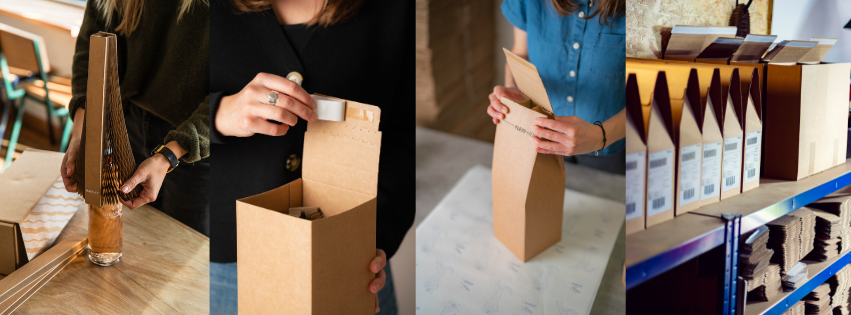
Paper honeycomb sleeves – like the Flexi‑Hex system – were developed specifically to protect fragile items moving through courier networks, not sitting on pallets. The sleeve ships flat, then expands into a rigid honeycomb around the bottle as you slide it on.
When you combine that sleeve with a right‑sized cardboard wine box, two important things happen:
Each bottle gets its own shell – the honeycomb structure absorbs impact and spreads force, rather than letting the bottle take the full hit.
Internal movement is controlled – snug box dimensions and locked necks mean bottles can’t build up momentum inside the carton when it’s dropped or stacked sideways.
Because the system is paper‑based and compact to store, it also ticks the boxes around plastic reduction, kerbside recyclability and tidy pack benches.

What couriers and tests are actually looking for
Courier networks and major retailers are increasingly interested in packaging that has been tested under realistic conditions, rather than just looking sturdy on paper. Industry test protocols like ISTA 3A simulate drops, vibration and stacking loads that represent a parcel’s journey through a typical network.
A key difference between “nice” packaging and courier‑ready packaging is whether it has been thought through in terms of:
Drop performance – how the box and its contents behave when dropped from common conveyor heights.
Vibration and rotation – whether bottles stay locked in position as cartons travel along conveyors and tip on and off trolleys.
Compression resistance – how cartons perform when stacked and squeezed in tight spaces.
Systems like Flexi‑Hex are designed with those specific stresses in mind, which is why wineries using them typically see fewer breakages than with generic cartons and wrap.
What we see surviving the network in New Zealand
Across NZ wineries and distilleries shifting more business to club, DTC and e‑commerce channels, a clear pattern has emerged.
The wine box packaging that tends to survive courier networks best usually has three things in common:
A snug outer carton – not an oversized shipper filled with void‑fill. Bottles should fit closely so they can’t slosh around.
Individual protection per bottle – honeycomb sleeves or equivalent shells, rather than relying on a thin divider grid alone.
A mono‑material story – paper‑based packs that are easy to recycle and don’t rely on layers of plastic or foam.
On the flip side, the cartons that fail most often are usually a mix of standard boxes, ad‑hoc dividers and whatever protective material happens to be on hand that week. They may be cheap up front, but the cost shows up later as replacement stock, extra freight and avoidable admin.
A simple “drop‑movement” check for your current boxes
You don’t need lab equipment to get a sense of how your wine box packaging is performing.
Here’s a quick, practical check you can run in the winery:
Pack a typical order – use your standard cartons and protective materials, then seal the box as normal.
Simulate a depot drop – from knee height and then waist height, drop the carton flat, then on a corner. (You’re looking for how the pack behaves, not trying to break it on purpose.)
Open and inspect – look for how far bottles have moved, whether necks are stressing dividers and whether there are new scuff marks or dings.
If bottles have shifted significantly or dividers have bowed, that’s a strong sign your current wine box packaging isn’t controlling drop movements – it’s just hoping they won’t happen.
Where Flexi‑Hex fits in your mix
Flexi‑Hex won’t be the only packaging system in your shed – standard cartons, pallet shippers and wool‑based solutions still have their place. But for most premium DTC, club and sample shipments that move one parcel at a time through courier networks, it’s usually the strongest “everyday workhorse” option.
Because the sleeves adapt to different bottle shapes and pair with a range of single‑, double‑, triple‑ and six‑bottle boxes, you can cover most routine shipments with a handful of SKUs. That simplifies packing, reduces storage clutter and keeps your wine box packaging story easy for customers to understand.
Next steps: stress‑test one shipment, not your whole business
If your current wine packaging has got you this far, there’s no need to rip everything out overnight. A small, controlled trial will tell you more than any brochure.
Pick one shipment type – maybe club packs, competition samples or your most complaint‑prone route – and run a short test with honeycomb sleeves and right‑sized boxes alongside your current cartons. Track breakages, packing time and customer feedback for a few weeks, then decide whether the numbers justify a wider rollout.
If you’d like a second set of eyes on your existing wine box packaging, or want to see how Flexi‑Hex could fit around your current cartons and freight partners, we can walk through a couple of recent shipments and make some practical recommendations.
