
You’ve arranged the tasting, confirmed the recipient and chosen the wines.
Now someone needs to pack them.
For a winery team juggling trade enquiries, customer orders and cellar door activity, sample dispatch can easily become another job squeezed into the day. Find a box, wrap the bottles, add the technical sheets and get it ready for collection.
But that small shipment has an important job. It might introduce your range to a restaurant, support a distributor conversation or put a new vintage in front of a reviewer.
A better approach starts with a consistent packing format: suitable protection around each bottle, a compatible outer carton and the information the recipient needs. Trial that complete arrangement before making it your standard.

A sample shipment is part of your sales process
Your wine will speak for itself when it’s opened. The delivery should make getting to that point straightforward.
Think about what the recipient needs when the carton arrives:
Bottles that are protected and clearly identifiable
The correct wines and vintages
Your contact details and a clear reason for the shipment
Relevant tasting notes or technical information
A pack that’s straightforward to open and unpack
The aim isn’t elaborate gift packaging. It’s a considered, practical delivery that reflects the care behind the wine.
A damaged sample also creates more than a replacement cost. Someone needs to contact the recipient, organise another bottle, repack it and arrange a second delivery. Where a tasting date is involved, timing adds another complication.
Start with the sample sets you actually send
Before choosing packaging, look at your regular trade requests.
Are you usually sending one bottle for review, two wines for a restaurant buyer or a broader selection for a distributor?
List your most common combinations and check them against the bottles you use. Include height, widest diameter and filled weight, particularly if your range includes different bottle shapes.
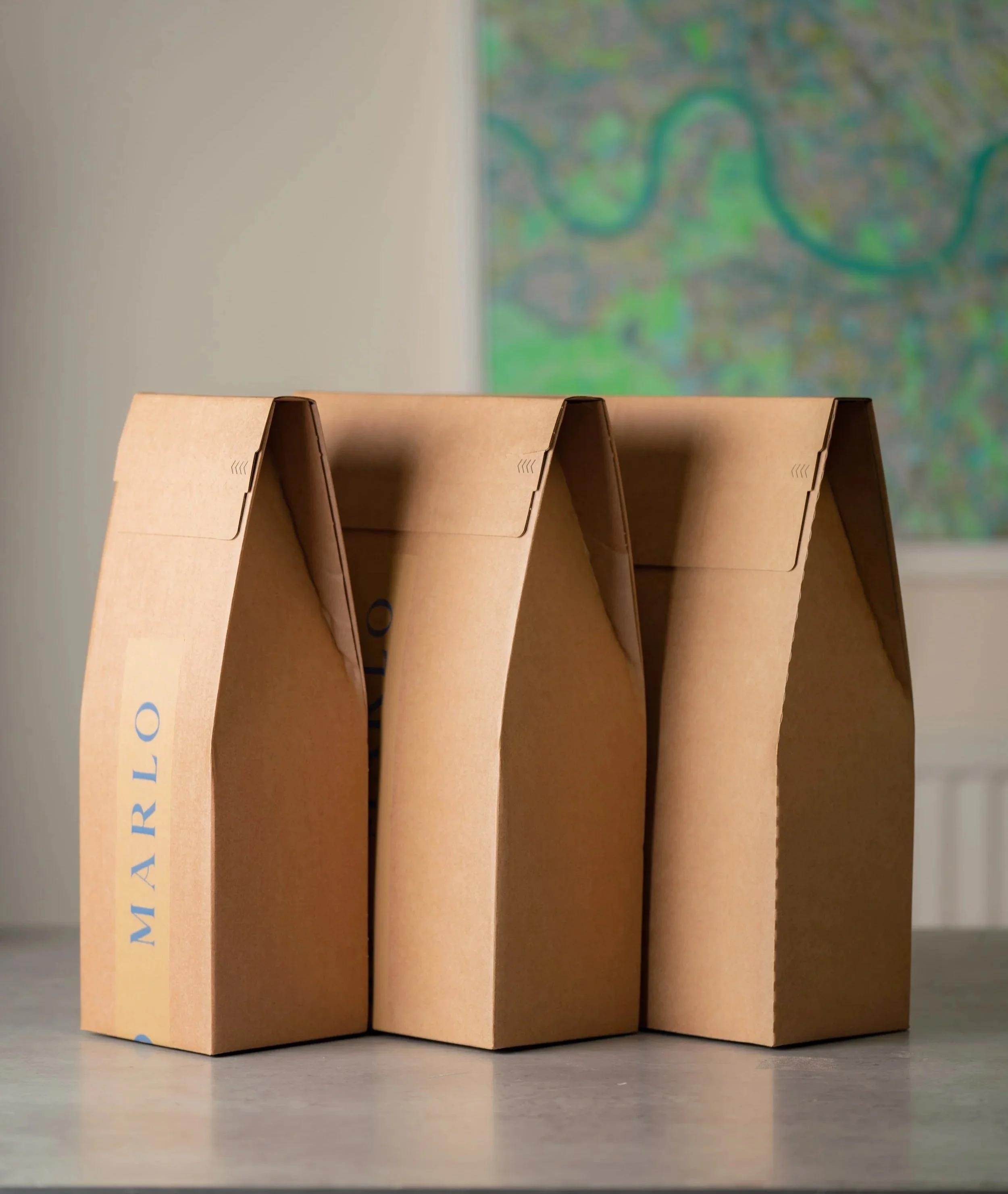
Woodhill’s Flexi-Hex Pinch Top boxes come in single-, double- and triple-bottle formats, with a separate six-bottle Fold Top option for larger selections. The Pinch Top range is listed for bottles up to a maximum height of 320 mm, but height alone doesn’t confirm compatibility — the complete fit still needs checking.
Start with your most frequent sample format rather than trying to solve every possible shipment at once.
Protect each bottle within the carton
A box that holds the right number of bottles isn’t the whole packaging decision. What happens inside it matters, too.
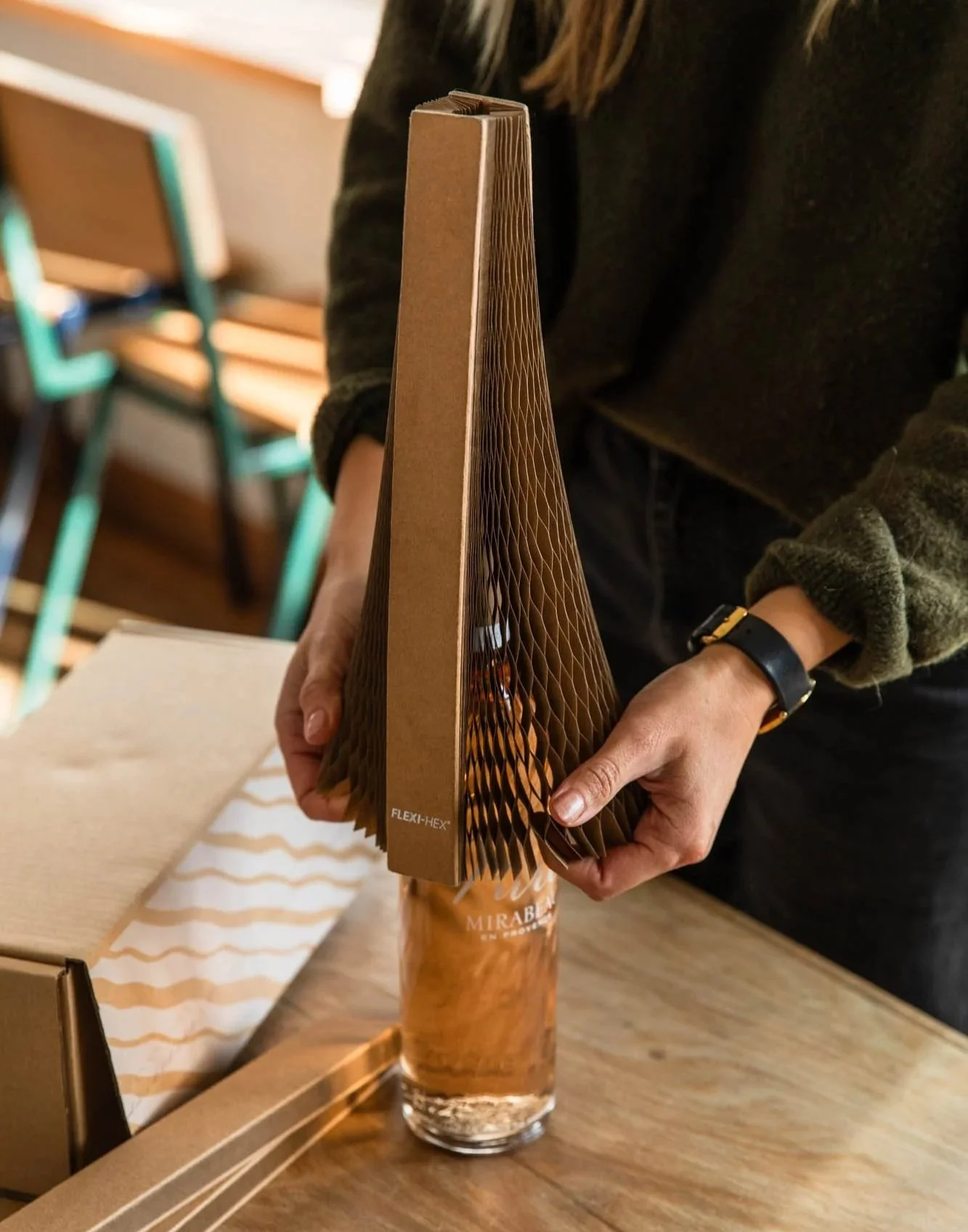
The Flexi-Hex Pinch Top system combines an expandable honeycomb paper sleeve around each bottle with a purpose-designed outer carton and protective base insert. The top pinch helps limit bottle movement within the pack.
For wineries, this offers a defined sleeve-and-box combination to assess instead of assembling each shipment from whichever wrapping and carton happen to be available.
When building your trial pack, check:
Each sleeved bottle fits the intended carton
The required base insert is correctly positioned
Bottles remain separated
The carton closes without forcing or bulging
Added documents don’t interfere with the protective arrangement
Don’t assume a pack that suits one bottle shape will suit your entire range. Check mixed selections as well as matching bottles.
Keep the trade information useful
The recipient shouldn’t need to search through an email thread to work out who sent the wine or why.
Include a short packing note with the winery name, sender’s contact details, the wines enclosed and the purpose of the shipment.
Depending on the recipient, useful supporting information might include:
Wine name, vintage and region
Relevant technical details
Trade pricing or a separate price-list reference
Availability information
A link or QR code to further product information
Keep it relevant. A reviewer, restaurant buyer and distributor may need different information.
For mixed selections, a simple bottle list also gives your team a final check before sealing the carton.
Make repeat shipments easier to pack
If you send the same sample format regularly, document it.
A short packing guide can show the sleeve, carton, insert and document placement, along with a photo of the finished arrangement. Keep the components together so whoever handles dispatch can follow the same process.
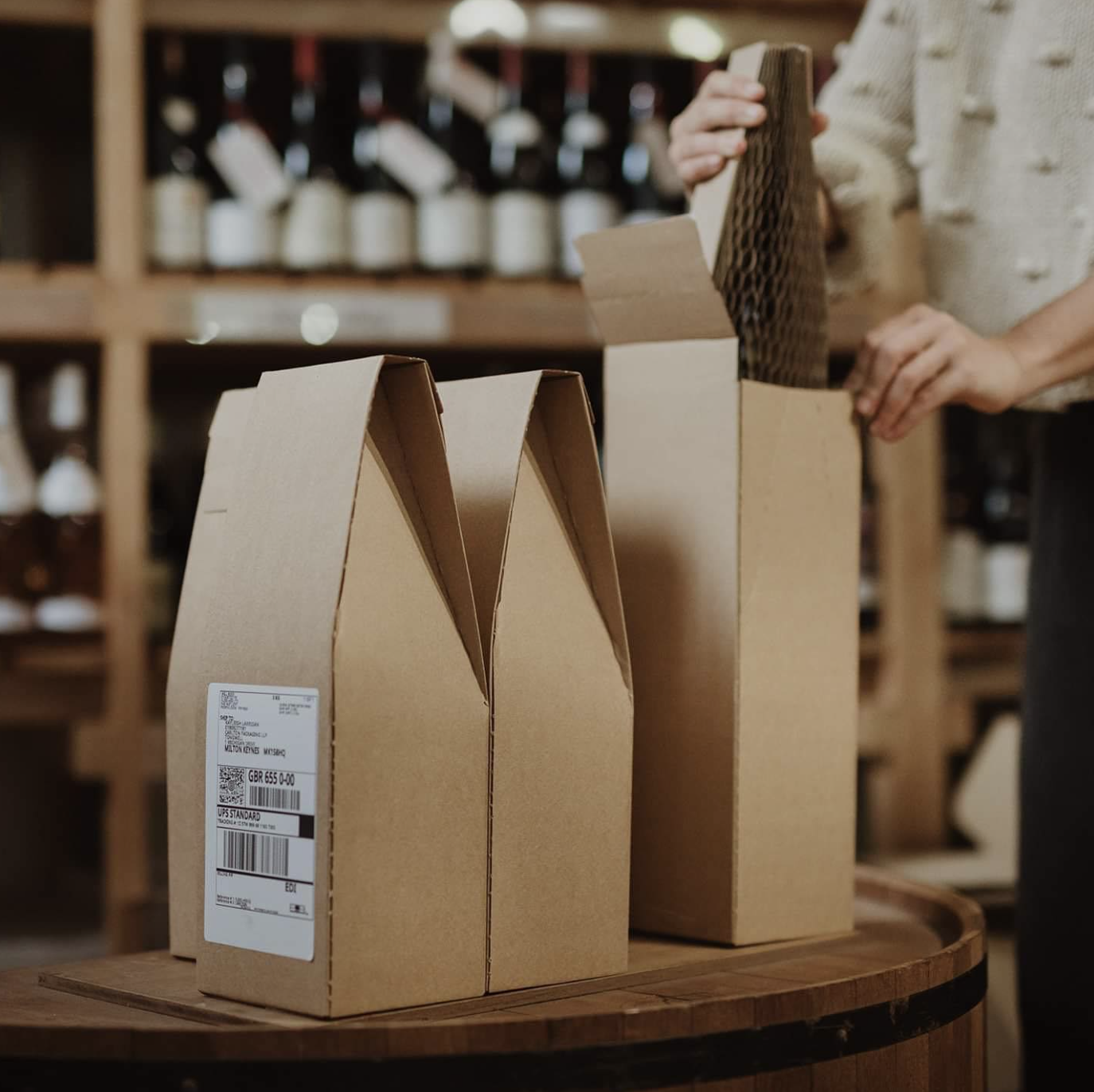
Flexi-Hex sleeves store compactly before expansion, while the boxes store flat before assembly. This can make a defined sample-packing station easier to organise than a collection of bulky wrapping materials and assorted cartons.
For a small team, the useful question is simple: can someone else pack this order correctly without having to work it out again?
A local example: Wine Brokers NZ
Wine Brokers NZ introduced Flexi-Hex MINI sleeves with two- and three-bottle Pinch Top boxes and six-bottle Fold Top boxes for its sample shipments.
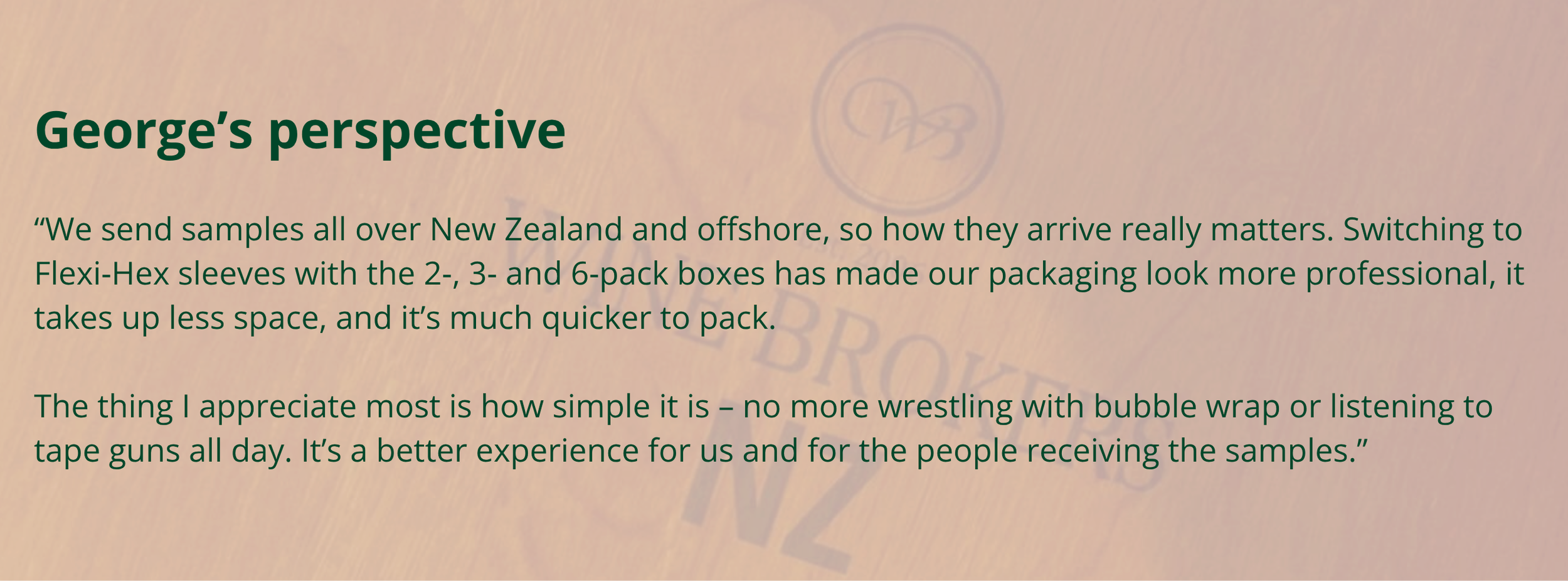
Woodhill’s published case study reports more consistent presentation, less storage space required and a simpler packing process after the business moved away from ad hoc box selection and wrapping.
That example doesn’t establish what every winery will achieve. It does illustrate a practical approach: identify regular sample formats, choose compatible components and create a repeatable process.
Paper-based protection without unnecessary fuss
Trade samples don’t need elaborate presentation, but the materials still say something about your brand.
Flexi-Hex MINI sleeves are made from 100% recycled paper and are plastic-free. Paired with a suitable cardboard carton, they offer an alternative to plastic bubble wrap for bottle protection.
The honeycomb finish also gives the pack a consistent appearance without requiring extra decorative layers.
Assess the full shipment before making disposal claims. Tape, document wallets and other additions may need different handling from the paper sleeve and carton.
Trial one sample format before standardising
Choose a typical shipment and test it with your actual bottles.
Build the complete pack. Include sleeves, inserts, the outer carton and any documents.
Check the process. Note the assembly steps, fit and time involved.
Send a representative trial. Use your usual delivery service and ask the recipient to photograph the pack and bottles on arrival.
Review the result. Look for movement, damage, label marks and anything awkward about opening.
Record the setup. If it works for that format, document the components and packing method.
A successful trial is useful feedback, not a guarantee against future damage.
For overseas samples, check the carrier’s current alcohol acceptance rules, destination requirements and documentation separately. Protective packaging doesn’t replace those checks.
Find a better pack for your next wine samples
If you’re reviewing how you send wine to buyers, reviewers or distributors, start with one regular sample order.
Send Woodhill Distribution your bottle dimensions, filled weights, a photo and the number of bottles you usually send. We can help identify a Flexi-Hex sleeve and carton combination to trial.
For one- and two-bottle formats, the Wine & Spirits Sample Pack includes two MINI sleeves, a single Pinch Top box and a double Pinch Top box so you can assess the fit with your own bottles.
Sending a larger selection or mixed bottle shapes? Get in touch before choosing your format.
