

D2C is the margin lever — if you can ship without breakage
For an NZ distillery, direct-to-customer is one of the few channels where you actually keep the margin. No distributor, no off-licence cut, no shelf fee — just the brand, the bottle and a courier.
The catch: you're putting a heavy, breakable, R18 product onto a courier network that wasn't designed for it. Gin bottles are tall and slim and topple sideways under load. Whisky bottles are squat and heavy and concentrate impact at the corners. Cork closures don't love side pressure. And every breakage costs you the bottle, the freight, the resend, the customer service hour and — when you're shipping at $80 to $250 a bottle — a chunk of margin that a wine club would never tolerate.
This is fixable. The protective packaging side of D2C spirits has matured a lot, and the format options for 1, 2 and 3-bottle dispatches now genuinely hold up to a Kiwi courier network. Here's the checklist we'd run through with any NZ distillery getting serious about D2C.

What "shipped well" actually means for spirits
Spirits packaging has to do three jobs at once.
Functional protection. Damage rates above about 1% will quietly eat your margin. At spirits price points, a 3% damage rate is a category-killer. Cork closures and screw-tops both fail in different ways under impact — the bottle can survive while the seal leaks, which is arguably worse than a clean break.
Premium experience. Spirits buyers are paying for craft and provenance. A heavy embossed bottle in a foam-and-bubble-wrap insert undoes the brand work the moment the box is opened. About 60% of spirits sold D2C in NZ are gifts at some point in the year — Father's Day, Christmas, birthdays, corporate. The packaging is the gift, not just the wrapper.
Regulatory and freight discipline. R18 signature on delivery is non-negotiable. Volumetric weight is unforgiving on heavy glass. Courier networks vary in how they handle "fragile" labels and how they route alcohol shipments. The packaging needs to play nicely with all three.
The packaging checklist for NZ distilleries
Run through this before locking in any D2C packaging spec.
1. Right-size to the dispatch, not the SKU. Build the carton around your most common shipment configurations — typically 1, 2 or 3 bottles for a craft distillery — not around a generic "spirits carton." Right-sized cartons cut volumetric freight charges and reduce in-box movement, which is where most damage starts.
2. Match the protection to the glass shape. A tall London Dry gin bottle and a squat single malt decanter need different things from a packaging insert. Anything that requires a custom mould per SKU is a fulfilment trap — you'll be re-tooling every time you launch a new bottle. Look for protective formats that adapt to the bottle shape rather than the other way around.
3. Stress-test cork and closure performance. Drop-test with the bottle horizontal, not just vertical. Spirits bottles spend most of their courier journey on their side, and a cork that's fine under top-load can leak under sustained side pressure on a hot North Island truck.
4. Choose materials that finish the brand story. A craft distillery that puts polystyrene or moulded plastic inserts in the carton is sending a message — and it's not the one their customer paid for. Honeycomb paper sleeves, kerbside recyclable, reusable and home-compostable, finish a premium brand experience the way the bottle deserves.
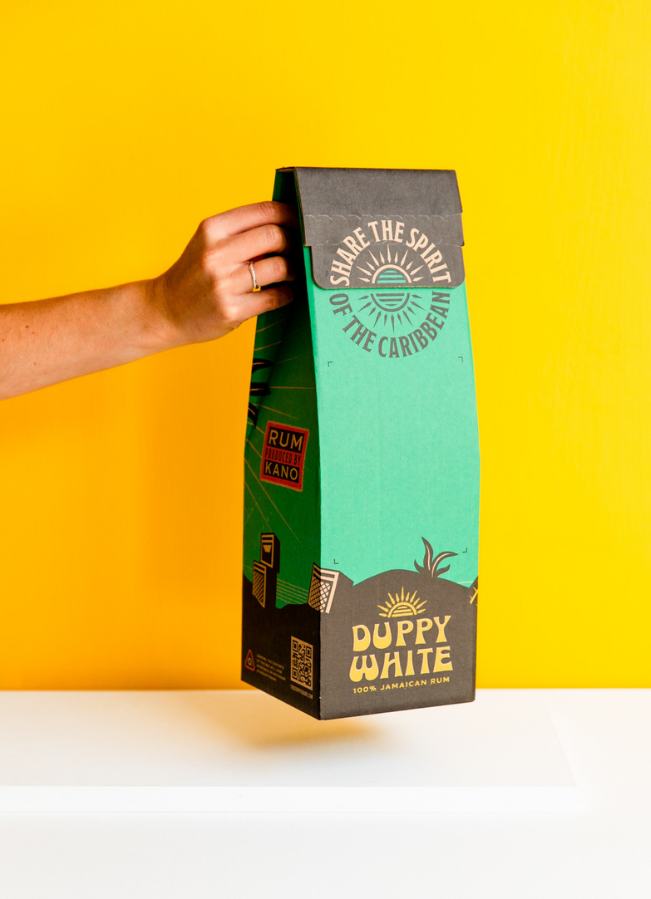
5. Print the outer carton. A printed mailer is one of the cheapest brand impressions a distillery will ever buy. Every doorstep delivery is a billboard for the courier driver, the receptionist, the flatmate. Even one-colour print on the outer transforms the dispatch.
6. Design the unboxing. A tear strip, a printed inner flap, a tasting card or cocktail recipe under the first sleeve — small moves that lift a $120 dispatch into something the customer photographs. Spirits buyers post unboxings more than wine buyers do. Make it easy.
7. Confirm courier handling and R18 protocol. Different courier networks have different protocols for alcohol, signature-on-delivery and adult ID checks. Check that your packaging doesn't obscure the labelling the courier needs to see, and that the carton size fits the courier's freight categories without tipping into a higher band.
8. Plan for the resend. Damage rates are never zero. The format that's cheapest and quickest to repack as a one-off replacement protects the unit economics of the resend. This is where the 1-bottle format earns its place even for distilleries that mostly ship 2 or 3 at a time.
Glass shape matters more for spirits than for wine
Wine bottles are functionally interchangeable in protective packaging — Bordeaux, Burgundy and most still-wine shapes fit the same sleeve with no issue. Spirits aren't.
A few of the shapes a NZ distillery is likely to be shipping:
London Dry gin — tall, slim, round. Top-heavy when full, which makes side impacts disproportionately damaging
New Western or contemporary gin — often square-shouldered or geometric, with embossing or pressed glass detail that concentrates impact at corners
Single malt and craft whisky — squat, round or square, often heavy-base, sometimes decanter-style with a wide shoulder
Premium aged whisky — bespoke bottle shapes, sometimes asymmetric, often with wax-dipped closures that are fragile in transit
Liqueurs and aperitifs — wildly variable; flagon-style, hip-flask, blown-glass, tapered
The protective packaging that works for spirits has to flex to all of these without a custom insert per SKU.
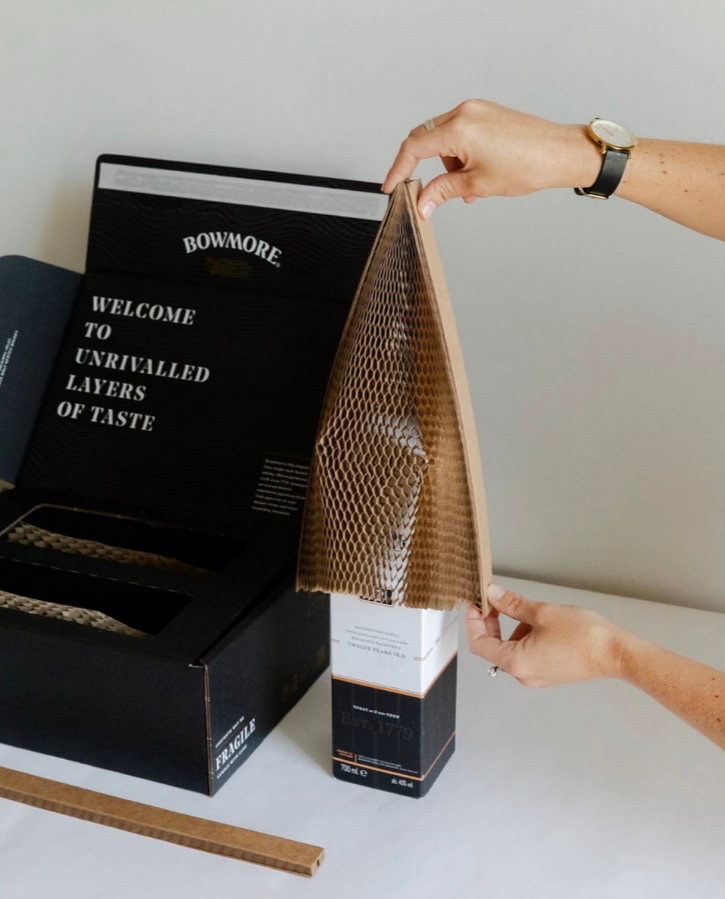
That's where Flexi-Hex earns its place. The honeycomb sleeve compresses to whatever shape it's wrapped around — a tall gin bottle, a squat whisky decanter, a tapered liqueur bottle — and absorbs impact through the honeycomb structure rather than relying on a moulded fit. One sleeve format, every spirits SKU you make.
A note on gift boxes and presentation tubes
Premium spirits often ship inside their own branded gift box, presentation tube or hinged timber case — and that's exactly the kind of detail that makes a $150 bottle feel like a $150 bottle.
The Flexi-Hex sleeve wraps around the gift box itself, not just the bare bottle, so the presentation packaging arrives at the doorstep in the same condition it left the distillery. No scuffed corners, no crushed tube, no need to rebuild the gifting moment after transit.
For distilleries that have invested in primary presentation packaging, this matters — the protection has to extend to whatever the customer actually unwraps.
Flexi-Hex formats for 1, 2 and 3-bottle spirits dispatches
Flexi-Hex is a honeycomb paper sleeve made from 100% recycled paper, kerbside recyclable, reusable and home-compostable. It adapts to the bottle shape on the bench during pack-down. For a NZ distillery shipping spirits direct to customers, here's how the formats play out.
1-bottle: gifts, single bottle reorders, replacements
A single MINI Flexi-Hex sleeve fits inside a slim mailer carton sized for one bottle. It's the format we'd recommend for:
Gift purchases — the dominant D2C use case for spirits, especially Father's Day, Christmas and corporate gifting cycles
Sample bottles and limited releases — small allocations that ship one-per-customer
Reorders — repeat customers buying their preferred bottle
Replacement bottles — the resend after a damaged dispatch, where shipping a single bottle in a 3-bottle carton looks careless and costs you on freight
The footprint is small enough that a Kiwi courier prices it as a parcel, which keeps the per-unit shipping cost manageable on what's often the highest-margin dispatch a distillery sends.
2-bottle: pairings, gift sets, two-for cycles
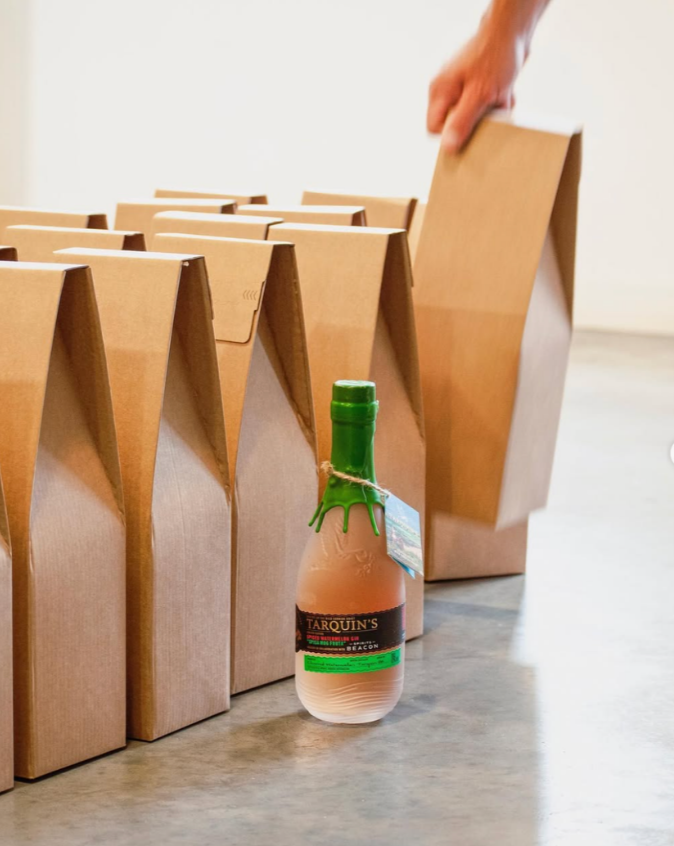
The 2-bottle format is increasingly the workhorse for craft distilleries running structured D2C — a gin and tonic syrup pairing, two expressions of the same spirit, a "his and hers" gift, a curated tasting pair.
What makes the format work:
Tight outer dimensions keep volumetric freight charges down on every dispatch
Honeycomb sleeves nest inside the carton with no void fill — no foam, no plastic, no air pillows
Adapts across glass shapes — you can ship two gins, two whiskies or one of each in the same carton format
Print real estate is generous enough for a clean brand panel without dominating
For distilleries running D2C subscriptions or curated drops, the 2-bottle format hits the best balance of unit economics and gift-readiness.
3-bottle: tasting sets, premium tiers, reserve releases
A 3 pack Flexi-Hex box holds three sleeved bottles, vertical or horizontal. It's the format we'd recommend for:
Tasting flights — a vertical of one distillery, a regional flight, a varietal range
Reserve and limited release drops — where the bottle price justifies the freight cost on a heavier carton
Premium gift sets — corporate end-of-year, milestone gifts, hampers
Subscription "drop" cadences — quarterly releases that ship larger and less frequently than monthly
A 3-bottle spirits carton is heavier than the wine equivalent — premium spirits glass is dense — so freight cost per parcel is higher. Per-bottle, though, it usually works out, and the format earns the bigger unboxing experience that the price point demands.
Why this matters for recurring D2C dispatch
D2C spirits packaging isn't a one-shot decision. You're committing to ship the same formats to the same members, gift recipients and repeat customers for years. Three things follow.
Consistency is the brand. Whatever the first dispatch looks like, every subsequent dispatch needs to match. Members and repeat buyers notice when standards slip.
Fulfilment speed compounds. Honeycomb sleeves are faster to pack than wrapping bottles individually, faster than cutting custom dividers, and faster than running a foam-pillow machine. On a 200-dispatch Christmas week, 20 seconds saved per box is measurable.
Damage economics are unforgiving at spirits price points. A 1% reduction in damage rate at $40-a-bottle wine is real money. At $150-a-bottle whisky it's transformational.
Ship gin bottles, ship whisky safely, ship all of it through one format
If you're a NZ distillery running D2C and you'd like to talk through which Flexi-Hex format fits your bottle shapes, dispatch profile, freight rates and brand position — that's the conversation we like having.
Woodhill Distribution is the NZ distributor for Flexi-Hex protective packaging. We carry 1, 2 and 3-bottle spirits formats in stock locally — and the same sleeves work across gin, whisky, rum, liqueur and bespoke craft glass.
