

You’ve shaped it, finished it and checked it. Now the board needs to reach its next owner.
That last step shouldn’t feel like a separate construction project involving layers of bubble wrap, improvised cardboard and repeated adjustments.
For shapers, surf retailers and board brands, the aim is straightforward: protect the board, keep the packing process manageable and avoid using more plastic than necessary.
Flexi-Hex offers a paper-based approach that combines expandable protective sleeves with a purpose-designed outer surfboard box. The sleeves provide cushioning around the board, while the box encloses the protected board for transit. The important step is checking how those components work together around your actual board.
Start with the board, not the wrapping roll
A shortboard and a wider retro shape don’t present the same packing job. Length matters, but so do width, thickness and the shape of the nose and tail.
Before choosing packaging, record:
The board’s length, widest point and thickness
Its nose and tail shape
Any fixed fins or other projecting features
Which accessories, if any, will travel with it
Your usual delivery method and destination
These details help identify a sleeve and box combination to assess. Don’t choose a sleeve by length alone or assume that a setup used for one board will suit every shape in the rack.
Woodhill’s Flexi-Hex Lite sleeve is intended for applications including shortboards, while the Mid sleeve offers greater expansion for wider boards, including retro and longboard shapes. Confirm the fit against the board’s full profile rather than relying solely on those categories.
How the sleeves fit into the packing process
Flexi-Hex sleeves arrive compact and expand into a honeycomb paper structure.
To apply them, open the sleeve and slide it over the board. Use the appropriate number and arrangement of sleeves to cover its length, checking the coverage around the deck, rails, nose and tail.
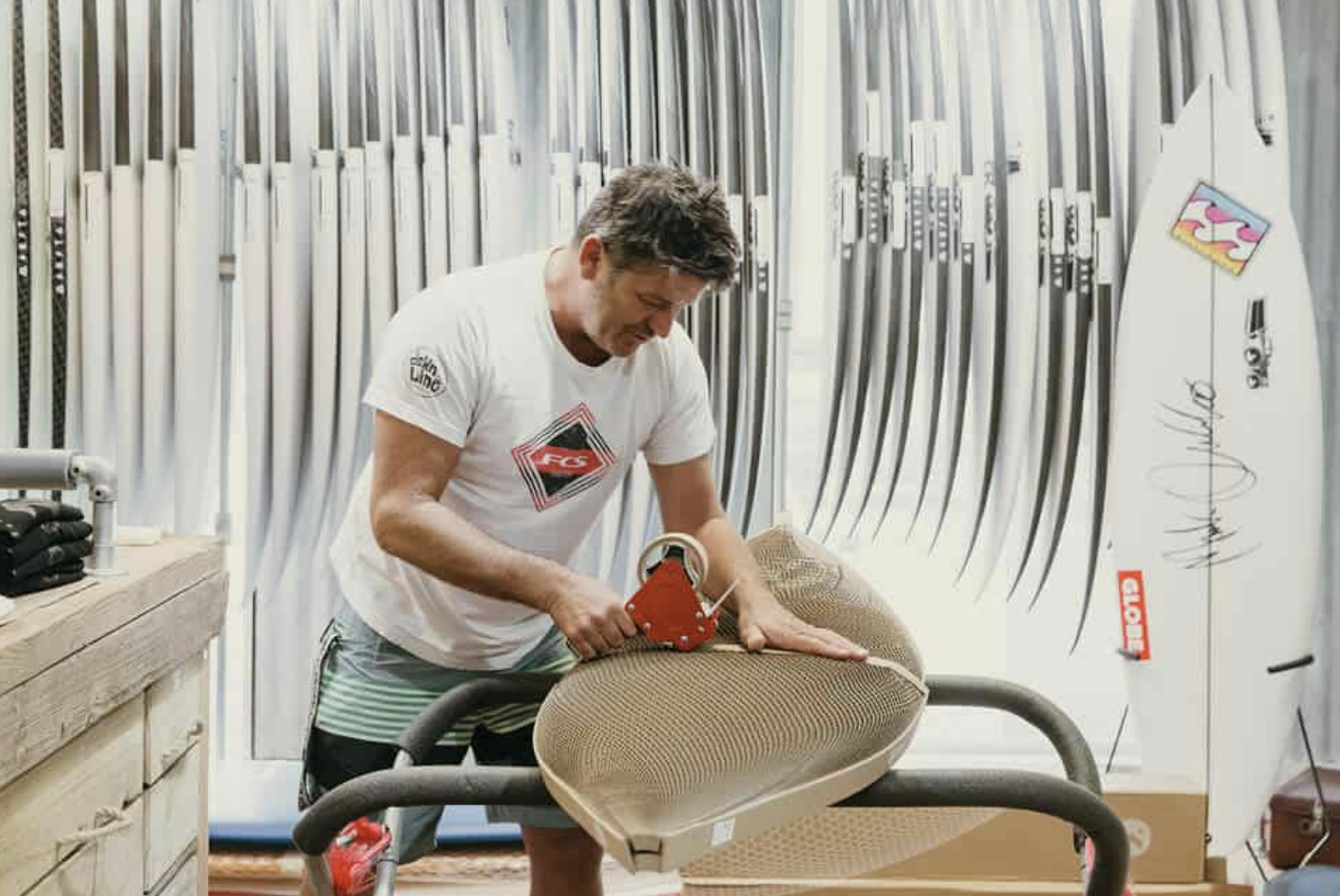
The sleeves are open-ended and can be cut to size or joined with paper tape to accommodate different board lengths. This makes the arrangement adaptable, but it still needs to be checked for your particular board.
At the packing bench, pay attention to:
Coverage at both ends of the board
How the sleeves sit around the rails
Any gaps where sleeves meet
Areas where the board’s shape changes sharply
Whether the protection remains in place as you fit the outer box
The goal is a defined protective arrangement you can repeat — not simply replacing each layer of plastic wrap with another material.
The outer box completes the pack
A sleeve provides cushioning. It isn’t a substitute for an appropriate shipping carton.
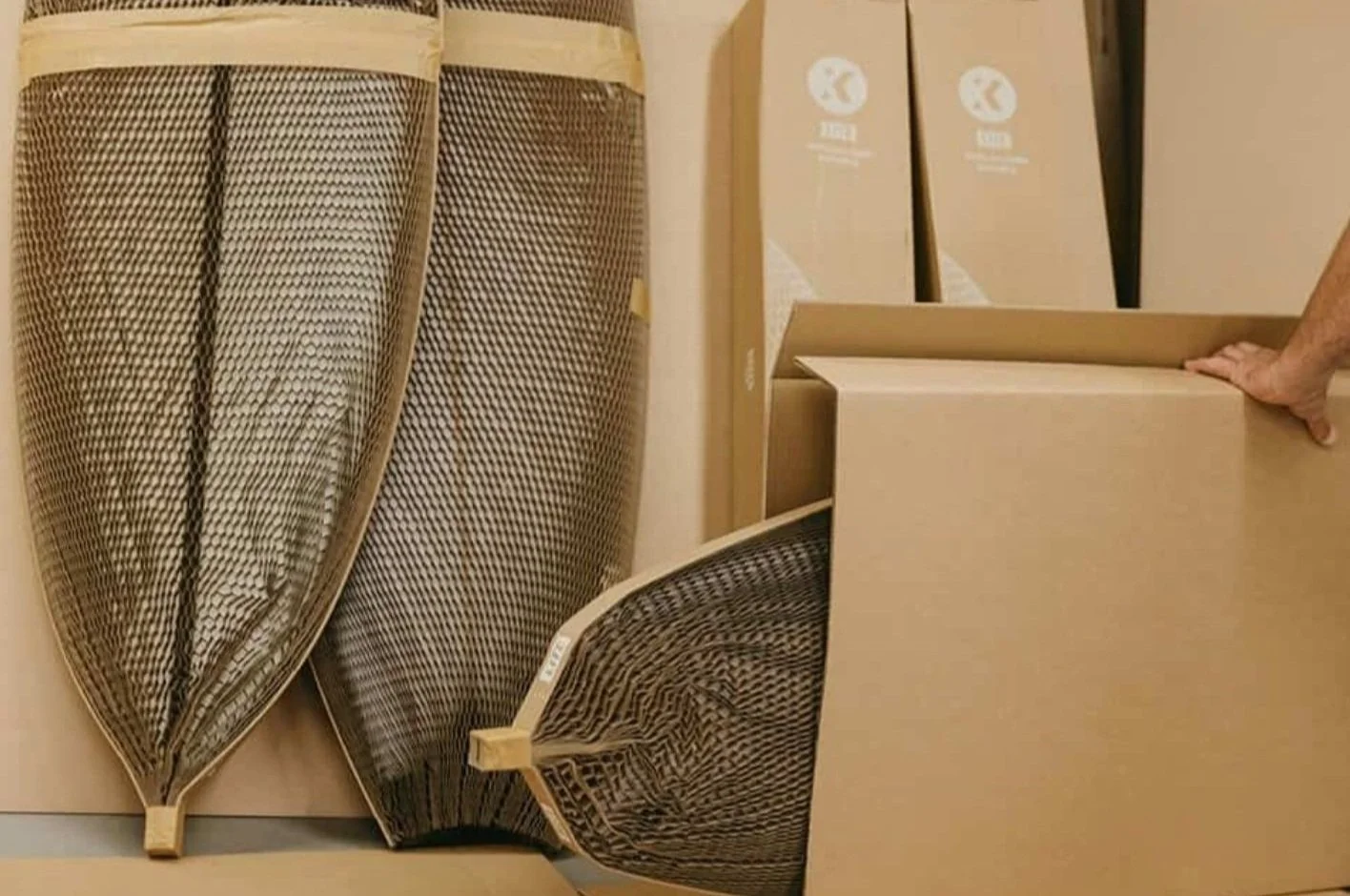
Flexi-Hex recommends placing sleeved products in a snug-fitting outer box for delivery. For surfboards, Woodhill supplies a purpose-designed box intended to work with the sleeves.
The surfboard box uses sections that slide over each other to adjust to the board’s length. Its ends fold into rigid corner brackets shaped to help protect the nose and tail. The sections use a peel-and-seal closure, and the boxes arrive flat-packed.
Before sealing, check that:
The sleeved board fits without forcing the box closed
Protection hasn’t shifted during insertion
The nose and tail sit correctly within the end sections
The board cannot move freely inside
Nothing added to the shipment can contact or damage the board
The closures engage correctly
Confirm the required box configuration with Woodhill, particularly for longer boards, unusual shapes or fixed fins.
Look for fewer wrapping steps — then measure the result
If your current method involves cutting several materials, building up layers and repeatedly adjusting the pack, there may be an opportunity to simplify.
The practical question is: does a sleeve-and-box system make your packing process easier to repeat?
Trial it from start to finish. Include:
Collecting the packaging components.
Applying and arranging the sleeves.
Fitting the outer box.
Checking the board’s position.
Closing and labelling the shipment.
Clearing the packing area.
Time several examples, not just the first attempt. Note where the process feels straightforward and where it needs adjustment.
Compare that with your current method using similar boards. You’ll get a useful result for your workshop — without relying on a packing-time claim that may not reflect your boards, team or existing process.
Reduce reliance on plastic wrap
Replacing plastic-heavy wrapping starts with identifying which materials are doing useful protective work and which are simply part of the routine.
Flexi-Hex Lite and Mid sleeves provide paper-based cushioning as an alternative to conventional plastic wrapping. Woodhill lists these sleeves as made from over 85% recycled paper pulp, plastic-free and kerbside recyclable. Its surfboard boxes are also plastic-free and kerbside recyclable.
That gives you a specific material story to share with customers: paper protection and a cardboard outer box, rather than vague claims about “greener” shipping.
Check the rest of the shipment separately. Additional tape, labels, accessory bags or other materials may have different disposal requirements.
Plan for the space around the packing bench
Board packaging can take up room before a single order is ready to leave.
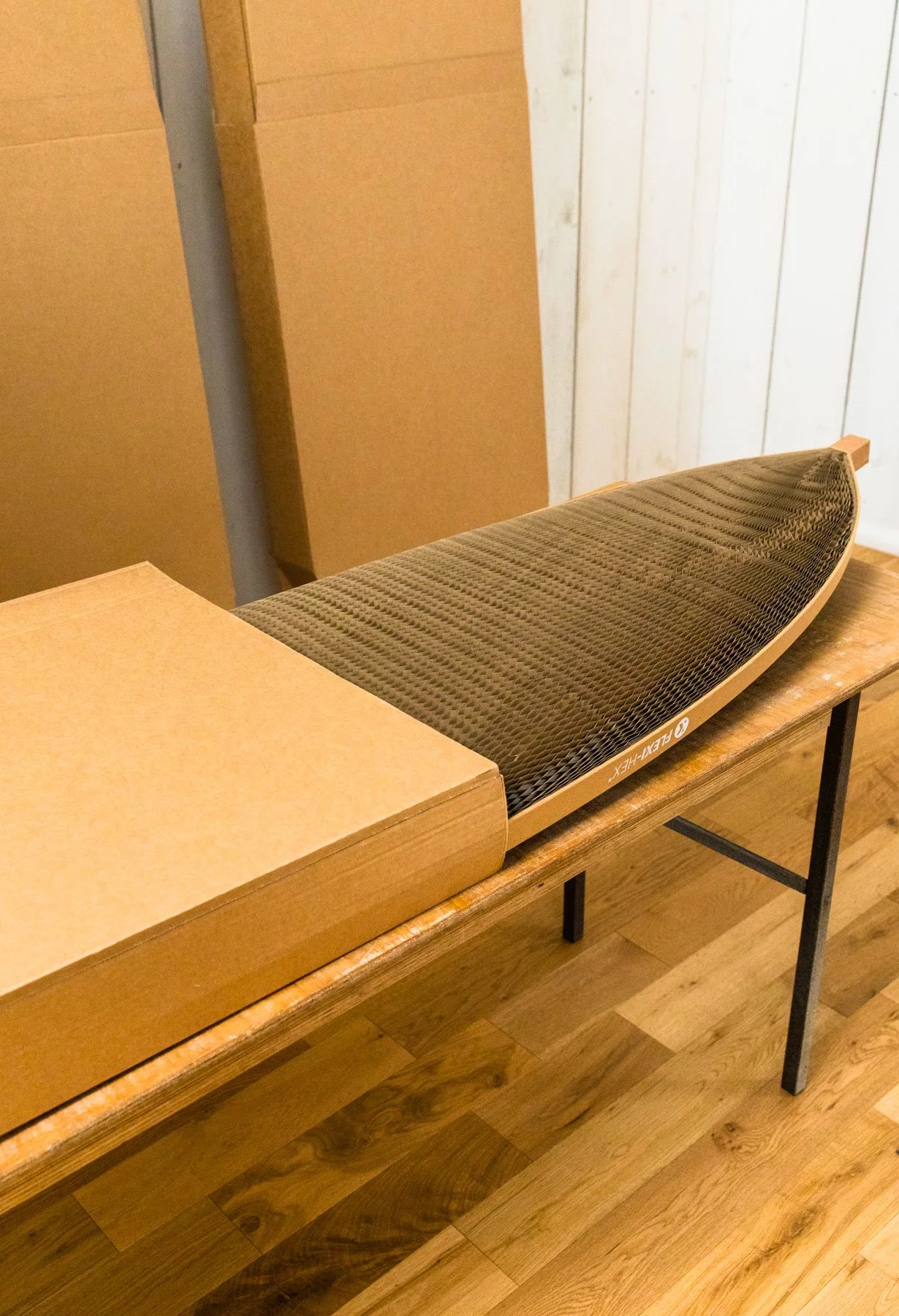
Flexi-Hex sleeves store compactly before expansion, and the surfboard boxes arrive flat-packed. That makes storage part of the assessment, alongside protection and packing time.
During your trial, consider:
Where sleeves and box sections will be stored
How many components need to be within reach
How much clear space is needed to pack a board
Where completed orders will wait for collection
A tidy, repeatable layout is useful whether you’re sending one custom board or preparing several retailer orders.
Trial the complete system before changing your standard
Start with a representative board and the sleeve-and-box combination you intend to use.
Photograph the packing arrangement, record the components and send a trial through your usual delivery service. Ask the recipient to inspect both the board and packaging on arrival.
Look for movement, compressed areas, exposed sections or any marks on the board. Review how easy the pack was to open and whether the protection stayed where you intended.
A successful trial is useful feedback, not a guarantee against transit damage. A different board shape or delivery route may need a separate assessment. Check your carrier’s packaging and acceptance requirements before dispatch.
Find a packing setup that suits your boards
Less wrapping should mean a more considered process — not less attention to protection.
If you’re looking to reduce plastic wrap or make board packing more consistent, send Woodhill Distribution:
A photo of the board
Its length, width and thickness
Details of fixed fins or unusual features
Your current packing method
Your typical shipment quantities and destinations
We can help identify Flexi-Hex sleeves and surfboard box options to trial before you change your standard packing process.
